Sir William Wilde: The Brilliant, Flawed Father
Before Oscar Wilde scandalized Victorian society, his father did it first.
Sir William Wilde was one of Ireland’s most celebrated men. A pioneering eye and ear surgeon, a tireless philanthropist, an antiquarian who tramped through Irish bogs documenting folklore, and a writer whose travel books were devoured across Europe. He was knighted in 1864 for his work establishing St. Mark’s Ophthalmic Hospital, where he treated the poor for free. He literally changed how medicine was practiced in Ireland.
He was also short, disheveled, perpetually ink-stained, and seemingly incapable of maintaining any social boundary whatsoever.
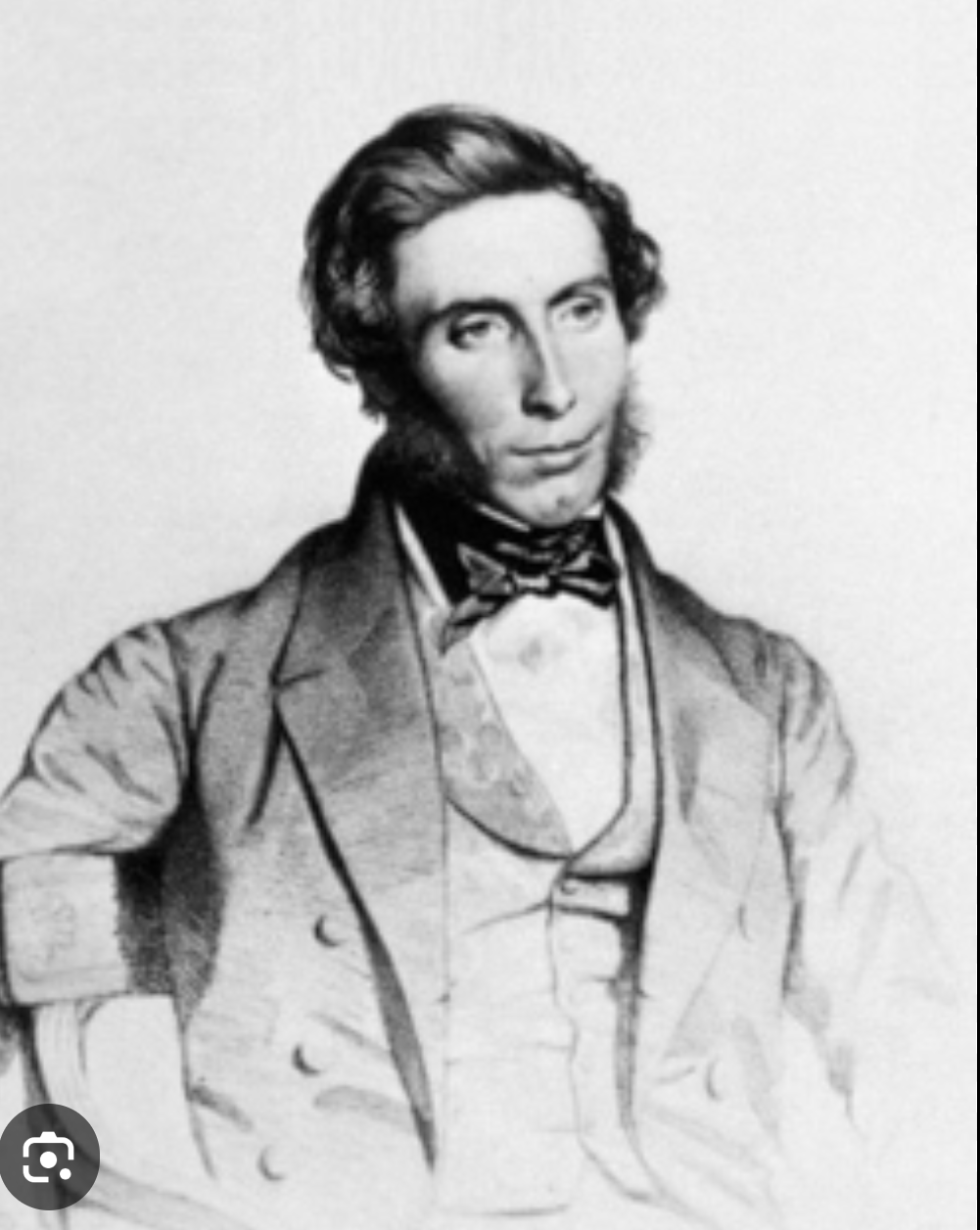
His colleagues admired him. His patients adored him. His wife, the flamboyant poet Speranza, found him endlessly fascinating. But Dublin society never quite knew what to make of this brilliant, untidy man who seemed to live in several worlds at once – the academic, the folkloric, the bohemian, the respectable.
A marriage of minds
William and Jane Wilde (Speranza) were an extraordinary pairing. Both were intellectuals, both were collectors of the strange and beautiful, both loved Ireland with fierce, complicated passion. Their home at 1 Merrion Square became a salon where artists, writers, and revolutionaries gathered. Young Oscar absorbed it all – the conversation, the performance, the sense that brilliance was its own form of theatre.
But theirs was not a conventional Victorian marriage. William had illegitimate children from before his marriage – children he supported and acknowledged, much to polite society’s horror. He worked obsessively, often seeing over fifty patients a day. He was generous to a fault, frequently treating people for free or forgetting to send bills. Money flowed through his hands like water.
And then there were the rumors. The whispers. The way certain women looked at him, and he at them.
The scandal that changed everything
In 1864, the same year William received his knighthood, a young woman named Mary Travers began spreading increasingly wild accusations about him. She claimed he had chloroformed and sexually assaulted her during a medical consultation. She wrote anonymous pamphlets. She accosted Speranza in the street. She made herself impossible to ignore.
Speranza, protective and proud, wrote a letter to Mary’s father calling his daughter’s claims lies. Mary sued for libel.
The trial was a sensation. Emer O’Sullivan captures its grotesque theatricality in The Fall of the House of Wilde – the way the courtroom became a stage, the newspapers feasted on every salacious detail, and Dublin society treated the whole affair as entertainment. Mary’s testimony was inconsistent and often bizarre. But it didn’t matter. The damage was done.
Sir William Wilde – knight, philanthropist, medical pioneer – was now William Wilde, the man who might have done something terrible. The court found for Mary Travers, awarding her a farthing in damages (the smallest coin in circulation – an insult in itself), but the real verdict was delivered by society.
He was never quite respectable again.
What Oscar learned
Young Oscar was nine years old when the trial happened. Matthew Sturgis, in his meticulous biography Oscar: A Life, shows how deeply this shaped Oscar’s worldview. He watched his brilliant father become an object of mockery. He saw how genius offered no protection from gossip. He learned that Victorian society loved nothing more than watching the mighty fall – especially when sex was involved.
Many biographers argue that Oscar’s understanding of public humiliation, hypocrisy, and the violence of the courtroom began not with Queensberry, but here — watching his parents become objects of gossip and satire.
A complicated legacy
Sir William Wilde remains a complex figure. He was brilliant, flawed, charismatic, admired, criticised, and — like his son — forever entangled with the Victorian hunger for scandal. His medical achievements were extraordinary. His personal life, messy. His marriage, passionate and turbulent.
But his influence on Oscar is undeniable. From his father, Oscar inherited:
- a flair for intellectual performance
- a fascination with folklore and the strange
- a distrust of public morality
- a belief that brilliance invites scrutiny
If Speranza gave Oscar wit and theatricality, Sir William gave him complexity — the knowledge that even a genius can be undone by the world’s thirst for spectacle.
The first Wilde scandal
When we think of Wilde and scandal, we think of 1895. But Oscar was not the first Wilde to face trial by public opinion. His father stood in that courtroom first — bewildered, proud, humiliated — entirely unprepared for how Victorian society used shame as entertainment.
In the end, Sir William’s downfall was not total, but it left cracks in the Wilde family that never fully healed. And through those cracks, young Oscar learned a truth he would later put into words:
“Every saint has a past, and every sinner has a future.”
— Written for Modern Wilde
Sir William wasn’t the only extraordinary figure in Oscar’s life. His mother, Lady Speranza, was a revolutionary poet who shaped his wit and theatricality. And his wife, Constance Wilde, became another victim of Victorian society’s hunger for scandal.
— Written for Modern Wilde