Ada Leverson and Oscar Wilde: The Sphinx Who Stood By Him
The friend who opened her door when almost everyone else closed theirs.
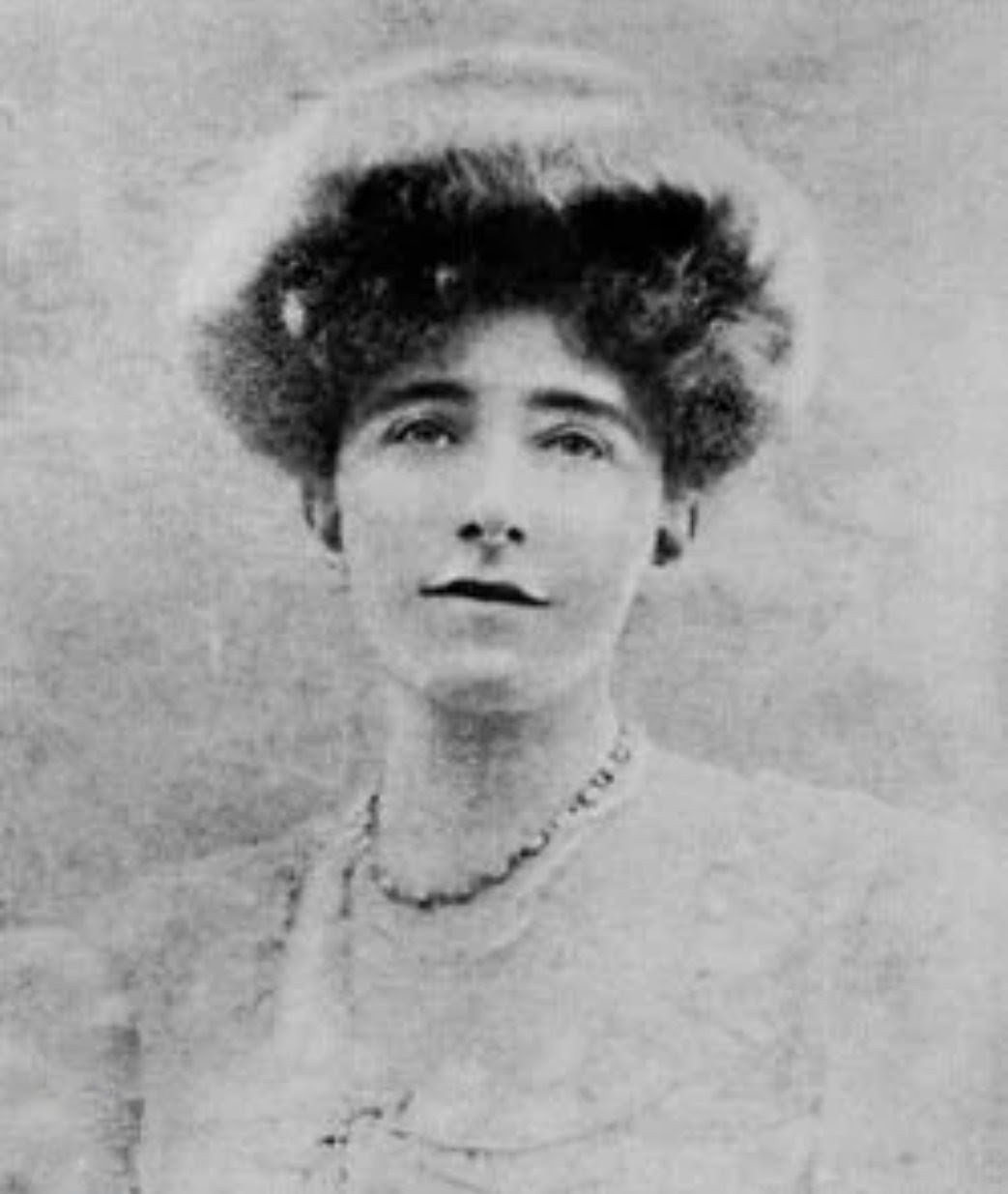
Ada Leverson, whom Oscar Wilde affectionately called “The Sphinx”
Introduction: Oscar Wilde’s most loyal friend
When Oscar Wilde faced his greatest crisis in 1895, most of his friends and admirers fell away with painful speed. Yet one remarkable woman remained steady: Ada Leverson, the sharp, quiet wit whom Wilde affectionately called “The Sphinx.” Their friendship is one of the most significant relationships in Victorian literary history. It outlived scandal, social ostracism, and personal tragedy.
Looking at Ada Leverson’s role in Wilde’s life tells us a great deal about both of them. It shows Wilde not only as a dazzling public figure but as a man who needed shelter, loyalty, and understanding. It also lets us see Leverson as more than a supporting character. She was a writer with a clear voice of her own, and her bond with Wilde opens a window onto questions of loyalty, friendship, and artistic kinship in one of literature’s most turbulent decades.
Who was Ada Leverson? Oscar Wilde’s literary confidante
Ada Leverson (1862–1933) was an accomplished writer, novelist, and parodist, although history has often tucked her away in the footnotes of Oscar Wilde’s story. Born Ada Beddington into a prosperous Jewish family, she married Ernest Leverson in 1881 and moved into the quick, competitive world of London society, where wit was a kind of currency. She had plenty of it.
Before she met Wilde, Ada was already publishing clever, pointed work in places like Punch and The Yellow Book. Her parodies showed a sharp intelligence and an instinct for style, and she was bold enough to turn that eye on Wilde himself. When he read one of her parodies in Punch, he did not sulk or take offence. Instead, he was delighted. He recognised a kindred mind and sought her out. The friendship that followed began with mutual literary admiration and grew into one of the most enduring connections of his life.
The friendship: a meeting of minds
The friendship between Ada Leverson and Oscar Wilde took shape in the early 1890s, when Wilde was at the height of his fame. London audiences were flocking to Lady Windermere’s Fan, A Woman of No Importance, and An Ideal Husband. At the same time, Ada’s home became a salon where writers, artists, and talkers came to test their lines and sharpen their ideas. Wilde was a frequent and favoured guest.
What made their friendship unusual was the balance of it. Wilde had many admirers; he did not have many equals. Ada Leverson could keep pace with him. Their conversations sparkled because neither of them was playing the part of passive audience. They exchanged epigrams, paradoxes, and literary jokes as peers. Wilde saw in Ada someone who understood conversation as a creative art, and who shared his belief that style and sensibility mattered.
His nickname for her, “The Sphinx,” pointed to something deeper than a fond joke. In myth, the Sphinx holds riddles and hidden knowledge. For Wilde, Ada combined intellectual subtlety with quiet discretion. She listened, remembered, and kept his confidences. Those qualities would become crucial when the glamorous surface of Wilde’s life cracked.
The trials of 1895: a door that stayed open
The real depth of Ada Leverson’s loyalty became visible during the catastrophe of 1895. Wilde’s relationship with Lord Alfred Douglas had led to a disastrous libel action against the Marquess of Queensberry, and then to Wilde’s prosecution for gross indecency. Respectable society recoiled. Friends slipped away, some quietly, some with loud public disavowals. Doors that had always opened to him now stayed firmly shut.
Ada Leverson did the opposite. When Wilde was out on bail between his trials, hotels refused him, and former supporters turned him away. Ada and her husband Ernest invited him into their home. They did this knowing exactly what it might cost them in reputation and social standing. In Victorian London, taking Wilde in was a statement. It meant risking gossip, hostility, and real social damage.
During those terrible weeks in April and May 1895, the Leverson home became a small island of sanity. Wilde, facing public hatred and the looming threat of prison, was able to sit at their table, talk, and even joke. Ada offered what he needed most: not theatrical sympathy, but normal human kindness. She let him be, for a moment, the person he had been before the headlines. That quiet act of hospitality is one of the bravest gestures in the whole story.
The full story of those terrible weeks is captured in works like Richard Ellmann’s magisterial biography and Merlin Holland’s The Real Trial of Oscar Wilde, which includes the uncensored trial transcripts. But Ada’s quiet act of keeping her door open gets less attention than it deserves. In the midst of legal arguments and public spectacle, she offered something simpler and more profound: a safe place to sleep.
Wilde’s gratitude: letters and lasting affection
Wilde did not forget what Ada had done. In letters written during and after his imprisonment, he speaks of his “dear Sphinx” with a warmth and simplicity that are striking. Wilde’s correspondence is often playful, guarded, or deliberately theatrical. His words to Ada are different. They reveal gratitude, trust, and a gentler tone.
Ada treasured these letters, eventually publishing them in 1930 as Letters to the Sphinx from Oscar Wilde, a slim volume that includes her own reminiscences of their friendship. The book remains one of the most intimate portraits of Wilde in his final years, showing both his vulnerability and his enduring wit even in the darkest circumstances. Through Ada’s eyes, we see Wilde not as a cultural icon but as a man who needed kindness and found it.
Even in Reading Gaol, where he served two years of hard labour, he held her in mind. When he emerged from prison in May 1897, broken in health and reputation, one of the first people he wanted to see was Ada. Their reunion was emotional. She did not treat him as a ruined celebrity or a tragic exhibit. She treated him as her friend.
The contrast between Wilde’s letters to Lord Alfred Douglas and his letters to Ada Leverson is telling. The former are full of pain, accusation, and unfinished business. The latter keep their warmth. With Ada, Wilde could be vulnerable without fear. She asked nothing from his disgrace, never sold her story, and never used his name as a ticket. That kind of restraint is rare in any age.
Ada Leverson’s own career: beyond the footnote
It is tempting to see Ada Leverson only as “Wilde’s loyal friend,” but that does her a disservice. She was a talented author in her own right. Her novels, including The Twelfth Hour (1907), Love’s Shadow (1908), and Tenterhooks (1912), show the same sharp observation and dry humour that first drew Wilde to her work.
Wilde’s influence on her writing is clear. The dialogue in her novels has something of his epigrammatic snap. Like Wilde, she writes about social absurdities and the strange, tight rules of respectable life. But Ada’s focus tilts more towards women: their marriages, their friendships, their attempts to think and feel freely in a culture that wants them neat and quiet.
Some critics have suggested that Leverson’s fiction hints at the direction Wilde might have taken if he had lived longer and gone on writing prose. Her work keeps the sparkle, but there is also a steadier, more domestic gaze. It is interested in drawing rooms and dinner tables, yes, but also in what it costs people, especially women, to play their expected roles so well.
The legacy of “The Sphinx”
The friendship between Ada Leverson and Oscar Wilde carries several lessons. It complicates the familiar story of Wilde as the isolated martyr of Victorian hypocrisy. He was persecuted by the state and abandoned by many, but not by everyone. Ada stands as proof that even in a repressive society, individuals can choose loyalty over fear.
In our own time, Wilde has become a cultural icon: a symbol of queer history, a patron saint of wit, and a shorthand for resistance to narrow moralities. Remembering Ada Leverson alongside him broadens that picture. She is an early example of what we would now call an ally. She used her home, her social credit, and her calm good sense to stand beside someone the world had decided to cast out.
Through Ada’s eyes we see a more human Wilde. Not only the author of glittering plays and aphorisms, but a man who needed somewhere to sleep when every hotel refused him. A man who needed one door to stay open when almost every other door closed.
Conclusion: remembering The Sphinx
Ada Leverson died in 1933, outliving Wilde by more than three decades. In that time she watched his reputation slowly mend. The plays returned, the essays were read again, and the public began to see more than the scandal. Ada did not cash in on any of it. She kept her memories, and his letters, largely to herself. She never betrayed his trust.
Behind every celebrated artist there are usually a few people like Ada Leverson, half-hidden in the background. They offer a spare room, a listening ear, a loyalty that does not wobble when the newspapers turn hostile. Wilde’s genius was his own. But his ability to endure the worst years of his life owed something to The Sphinx who stood by him.
In celebrating Oscar Wilde, it is worth pausing for Ada Leverson too. She recognised his gifts early, enjoyed them at their height, and did not abandon them when they became dangerous to know. Her quiet courage and her sharp, sympathetic intelligence are part of Wilde’s story. They deserve a place in modern Wildean memory.
Essential Reading About Ada Leverson and Oscar Wilde
Ada Leverson’s Novels:
- Love’s Shadow – The first in the Little Ottleys trilogy, showcasing Leverson’s wit and social observation
- The Twelfth Hour – Her debut novel, establishing her voice as a sharp observer of Edwardian society
Letters and Personal Accounts:
- Letters to the Sphinx from Oscar Wilde – Ada’s collection of Wilde’s letters with her own touching reminiscences of their friendship
Understanding the Trials:
- The Real Trial of Oscar Wilde by Merlin Holland – Uncensored trial transcripts revealing what happened in 1895