A Day in the Life of Oscar Wilde at His Peak
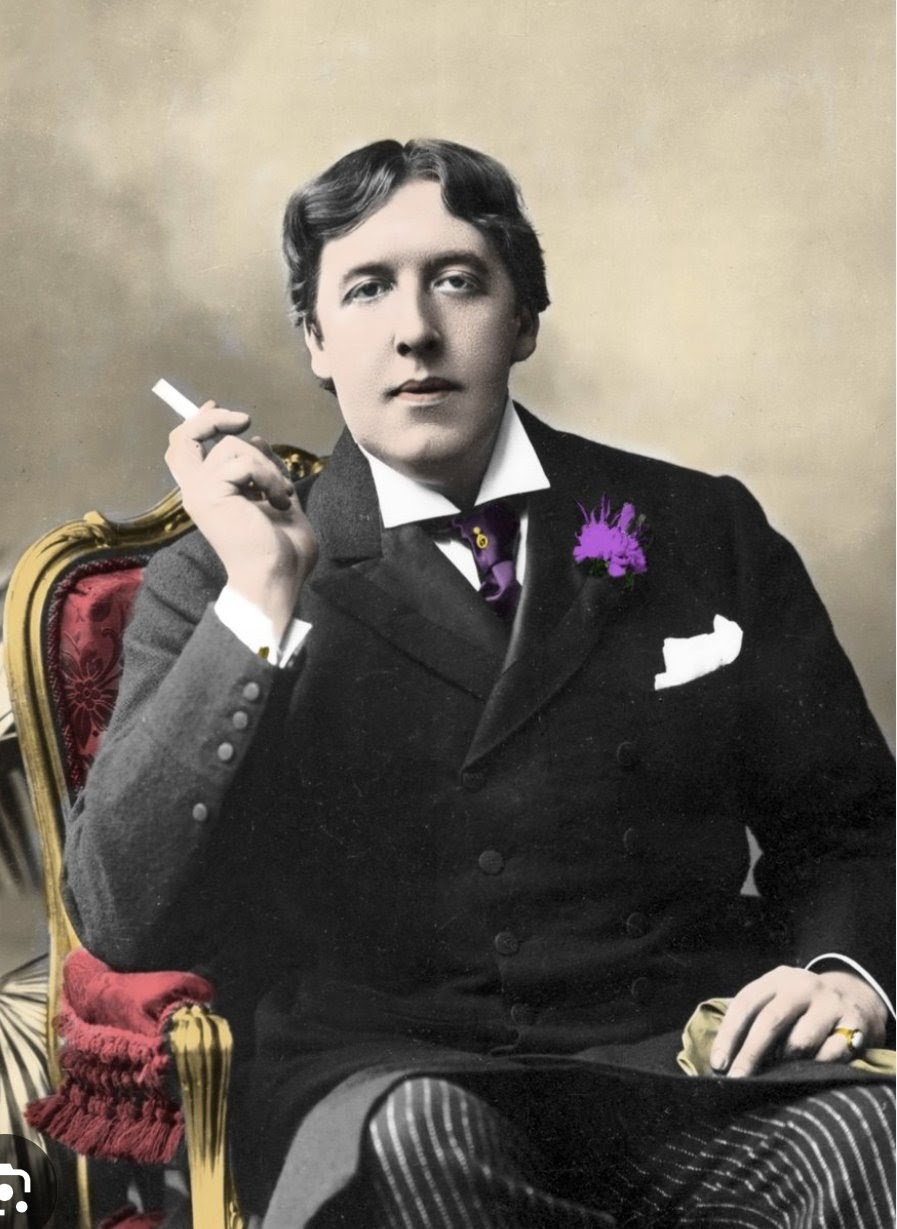
London, 1892. Oscar Wilde is the most famous wit in the city, possibly in the world. He has three plays running in the West End simultaneously—an unprecedented triumph. Everyone who matters wants to be seen with him, to hear him speak, to bask in the glow of his brilliance. Let’s follow him through a single day at the absolute zenith of his fame, when he seemed untouchable, invincible, the king of London society.
Morning: The House Beautiful
Oscar wakes late at 16 Tite Street, Chelsea, in the house he and Constance had decorated according to the highest aesthetic principles. The morning light filters through carefully chosen curtains into a bedroom that’s a masterpiece of controlled beauty—nothing accidental, nothing merely functional. Everything, down to the smallest detail, has been considered.
Constance has already breakfasted and is organizing the household. Their two sons, Cyril and Vyvyan, are with their governess. Oscar descends to the dining room in his dressing gown—not a shabby morning garment but something magnificent in silk or velvet—and takes breakfast alone. The table is set beautifully even for this solitary meal. For insight into the domestic world of Victorian houses like the Wildes’, Kit Wedd’s “The Victorian House” offers a fascinating glimpse into how upper-middle-class families actually lived, from the servants’ routines to the carefully orchestrated social performances of daily life.
He eats little—perhaps some fruit, toast, coffee. Oscar has never been a hearty breakfast man. His appetites lie elsewhere. After breakfast, he retires to his study to open his correspondence. There are invitations to dinners, requests for contributions to magazines, letters from admirers and supplicants, notes from theatrical managers, and always, always requests for money from young men he’s befriended.
He lights one of his gold-tipped cigarettes—an extravagance that perfectly captures his philosophy that life should be lived beautifully, at whatever cost. The cigarette case itself is silver, monogrammed, heavy with significance and expense. He dictates a few replies to his secretary, his voice already performing even in this private space, turning simple letters into small works of art.
The Toilette: Art Takes Time
By eleven o’clock, Oscar begins his toilette—the elaborate ritual of dressing that he treats with the seriousness other men reserve for business. This can take hours. It’s not vanity, exactly, or not merely vanity. It’s a philosophical statement: that the creation of oneself as a work of art matters more than punctuality or productivity.
His wardrobe is extensive and carefully curated. Today he chooses a velvet jacket in deep green—the color of aestheticism, of decadence, of everything that challenges the dreary brown Victorian convention. The shirt is pristine white with French cuffs. The cravat requires several attempts to achieve the perfect careless-careful knot that looks effortless but isn’t.
The buttonhole is crucial. Today: a green carnation, dyed specially, worn as a secret signal to those who understand. His hair is arranged just so, gleaming with macassar oil. The rings go on—he wears several, each chosen for its aesthetic merit. The watch chain, heavy gold. The walking stick with its silver top. Every detail matters. Every detail is a choice, a statement, a small rebellion against the ordinary.
He surveys himself in the mirror and is satisfied. Oscar Wilde, the most famous man in London, is ready to face his public.
Luncheon: The Café Royal
Shortly after one o’clock, Oscar arrives at the Café Royal on Regent Street—his favorite stage, his court, the place where he holds daily audience. The Domino Room is filling with the usual mixture of actors, writers, artists, journalists, and hangers-on, all hoping for a glimpse of the great man or, better yet, a moment of his attention.
He settles into his usual seat, orders champagne and oysters (he’ll touch little of either), and lights another gold-tipped cigarette. Within minutes, a small crowd has gathered around his table. Young men mostly—aspiring poets, artists, actors—drawn to him like moths to a brilliant, dangerous flame. Some are legitimate admirers of his work. Others want to be seen with him, to acquire some of his glamour by proximity. A few are more than friends, though this must never be spoken aloud in this public space.
For understanding the hidden geography of Oscar’s London—the coded world of the Café Royal, the discreet restaurants, the private rooms where Victorian respectability dissolved—Peter Ackroyd’s “Queer City” is invaluable. It maps the secret London that existed alongside the official one, the London Oscar inhabited with increasing recklessness.
Oscar holds court. He’s in magnificent form today, the conversation sparkling like the champagne he barely touches. Every observation becomes an epigram, every anecdote a perfectly constructed short story. He contradicts himself cheerfully—consistency is the refuge of unimaginative people. Someone mentions a rival’s new play. Oscar dismisses it with a perfectly timed phrase that will be repeated all over London by evening.
“I never put off till tomorrow what I can possibly do the day after,” he says, waving away a suggestion that he should work on his next play.
The luncheon extends through the afternoon. More champagne arrives. Someone reads aloud from a new poem. Oscar makes suggestions, improves lines, turns adequate verse into something memorable. He’s generous with his talent, profligate with his time. He picks up the bill, though he can’t really afford to—his income is substantial but his spending is stratospheric. His companion today, a beautiful young man named Alfred Douglas (though Oscar calls him Bosie), looks on adoringly.
Afternoon Calls: The Drawing Rooms of Mayfair
By four o’clock, Oscar extracts himself from the Café Royal and heads to Mayfair in a hansom cab, smoking as he rides through the London streets. He has several afternoon calls to make—it’s expected of a man of his social position. The great ladies of London society compete for his presence at their tea tables. He makes them laugh, makes them think, makes their drawing rooms the most desirable destination in the city.
At Lady Windermere’s (yes, there really was one, though not quite the one in his play), he’s the star attraction. The other guests hang on his words as he discusses art, politics, literature, fashion—everything except business, which he considers vulgar. He compliments the hostess on her decorations, though privately he finds them overdone. The tea is good, the cakes ignored. Oscar maintains his languid posture even while sitting, as though ordinary furniture isn’t quite designed for someone of his sensibilities.
“I can resist everything except temptation,” he murmurs, reaching for a fourth gold-tipped cigarette despite having just extinguished the third.
A society matron asks his opinion on the New Woman. He delivers a perfectly balanced response that seems to support both traditional femininity and radical independence simultaneously. Everyone is delighted. No one is offended. This is Oscar’s particular genius in these drawing rooms—to seem daring while remaining acceptable, to shock without truly disturbing.
Theatre Business: The Manager’s Office
At six o’clock, Oscar has a meeting with George Alexander at the St. James’s Theatre. Alexander is producing “Lady Windermere’s Fan” and wants to discuss the next play—what will become “The Importance of Being Earnest.” Oscar arrives late, unapologetic. Time bends around him; he’s never had much respect for clocks.
In the manager’s office, Oscar is transformed. The languid aesthete becomes, briefly, a shrewd businessman. He knows exactly what he wants for his work: a substantial advance, a percentage of the box office, his name prominent on all advertising. Alexander needs Oscar more than Oscar needs Alexander—they both know this. The meeting is cordial but pointed. They agree on terms. Hands are shaken. Oscar lights another cigarette and drifts out into the theatre, where rehearsals are in progress.
He watches for a few minutes, offering occasional suggestions that improve the performance instantly. The actors are grateful and terrified of him in equal measure. He has the power to make or destroy with a word, though he’s generally too kind to destroy unless provoked. “That line needs more champagne in it,” he tells one actress. She immediately understands and adjusts her delivery. The line sparkles.
Evening: Dinner and Performance
Dinner is at eight at the Savoy—another of Oscar’s favored venues, though ruinously expensive. Tonight he’s hosting a small party: Bosie, of course, and a few other young men, writers and artists who form his inner circle. The meal is elaborate: oysters again, sole, duck, elaborate desserts that Oscar regards with aesthetic appreciation but doesn’t eat. The wine flows. The conversation is even better than at luncheon, loosened by alcohol and the lateness of the hour.
Oscar is expansive, brilliant, slightly reckless. He tells stories that perhaps shouldn’t be told in quite so public a venue. His companions encourage him, laugh at everything, worship him openly. Across the dining room, other diners stare—some admiringly, some disapprovingly. Oscar notices neither, or pretends not to.
For the fullest portrait of Oscar during these years—the contradictions, the brilliance, the slowly gathering storm he couldn’t or wouldn’t see—Richard Ellmann’s definitive biography remains unsurpassed. Ellmann captures both the public glory and the private complexity, the genius and the fatal flaws, the man behind the performance.
After dinner, the party moves to the Haymarket Theatre, where “A Woman of No Importance” is playing to a packed house. Oscar enters his own play like a king entering his kingdom. The audience recognizes him, begins to applaud even before the performance starts. He bows slightly, acknowledging the tribute as his due.
From his box, he watches his own words delivered by actors who’ve learned to capture his distinctive rhythm. Every laugh from the audience pleases him. Every perfectly delivered epigram is a small victory. At the interval, admirers crowd his box. He receives them graciously, signing programs, accepting compliments, dispensing more wit. Someone asks if the play is autobiographical. “I never write about real life,” he says. “It’s far too improbable.”
After Hours: The Hidden World
The play ends to thunderous applause. Oscar takes a curtain call, though he’s done nothing but write the words. The audience adores him. He’s given them entertainment and intelligence in the same package, beauty and wit, surface and depth. They don’t want him to leave.
But eventually the theatre empties, and Oscar and his companions move on to one of the private supper rooms that exist in the margins of respectable London. Here the velvet curtains are drawn, the doors locked, the conversation even freer than before. More champagne, though by now Oscar is drinking hock. More gold-tipped cigarettes, the smoke hanging in the lamplight. The talk turns to poetry, to philosophy, to dangerous subjects that can only be discussed in these protected spaces.
Oscar reclines on a sofa, still perfectly dressed despite the late hour, still performing though the audience is tiny. He quotes from memory—Keats, Pater, his own work. He discusses his theories of art, of life, of the supreme importance of beauty over morality. His companions listen as though receiving gospel. Perhaps they are.
It’s nearly three in the morning when Oscar finally departs in a cab, alone now, heading back to Tite Street where Constance will be asleep and the house quiet. Tomorrow he’ll do it all again, or something very like it. The routine varies but the essential pattern remains: the careful toilette, the public performances, the private indiscretions, the constant creation and recreation of Oscar Wilde as the greatest work of art he’ll ever produce.
The Price of Glory
What Oscar can’t see, or won’t see, is that this glorious day is built on increasingly unstable foundations. The money he spends so freely is borrowed or spent before it’s earned. The young men he surrounds himself with include some who’ll betray him when the wind changes. The respectable society that lionizes him will turn on him with shocking speed when scandal arrives. The same wit that makes him indispensable will be used as evidence of his corruption.
But today, in 1892, at the absolute peak of his fame and power, Oscar Wilde is untouchable. He’s the most celebrated writer in London, the most quoted wit, the most desired dinner guest. He’s created himself as a perfect aesthetic object, lived his philosophy that life should be treated as art. The gold-tipped cigarettes, the velvet jackets, the carefully chosen words—all of it is a performance, but a performance that’s also deeply sincere.
He returns home in the early morning hours, lets himself in quietly, climbs the stairs to his bedroom in the House Beautiful. Tomorrow there’ll be more letters, more luncheons, more performances. The machine that is Oscar Wilde, that creates Oscar Wilde, must be fed constantly. The work is exhausting but also exhilarating. To be Oscar Wilde in 1892 is to be at the center of the universe, at least for a few glorious, doomed years.
He lights one last gold-tipped cigarette, watches the smoke rise in the darkness, and contemplates the impossibility of sustaining this level of brilliance indefinitely. But that’s tomorrow’s problem. Tonight, Oscar Wilde was the most famous man in London, and it was magnificent.