Dolly Wilde: Oscar Wilde’s Niece and the Wit Who Never Wrote
Dorothy Ierne Wilde was born on July 11, 1895—exactly three months after her uncle Oscar was arrested for “gross indecency.” She would spend her entire life in the shadow of the greatest scandal of the turn of the century, raised on stories of an uncle she never met but whose ghost shaped everything about her.
People who knew both said she bore an uncanny resemblance to Oscar—not just physically, but in her wit, her charm, her capacity for brilliant conversation. She inherited the Wilde gift for language, the family curse of self-destruction, and the terrible burden of a name that promised genius but delivered only tragedy.
Dolly Wilde became a legend in the Parisian literary salons of the 1920s and 30s, shining among women like Natalie Clifford Barney, Janet Flanner, and Djuna Barnes. She was called “an artist of the spoken word,” capable of holding a room spellbound with her stories and observations. But like her father Willie, she never wrote anything lasting. Her only written legacy is her remarkable love letters—brilliant, tortured, and heartbreaking.
She died at 45, the same age her uncle Oscar had died, her prodigious talents drowned in alcohol and drugs. This is the story of the niece who tried to live Oscar’s life again.
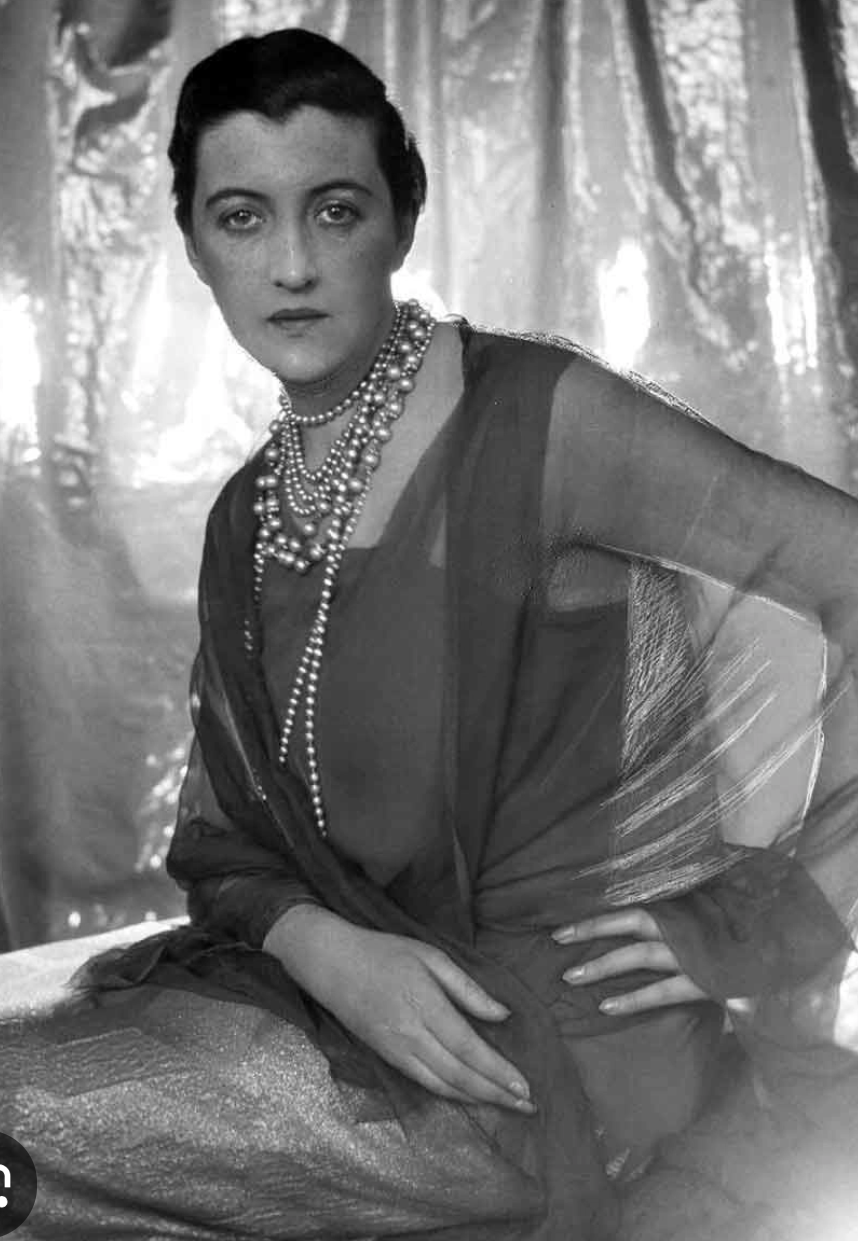
Born Into Scandal
Dolly’s birth in 1895 came at the worst possible moment for the Wilde family. Oscar was facing trial, public humiliation, and imprisonment. Her father Willie was struggling with alcoholism and financial ruin. Her mother Sophie Lily Lees was so impoverished she could barely afford to keep her daughter at home, eventually sending young Dolly to what she described as a “country convent.”
Dolly spoke little of her childhood. What we know paints a picture of instability, poverty, and the weight of a famous name attached to scandal. She grew up knowing she was Oscar Wilde’s niece, but in an era when that connection brought shame rather than pride.
Her father Willie died when Dolly was just four years old, in 1899. She was left in the care of her mother and stepfather, translator Alexander Teixeira de Mattos, but the household remained financially precarious. For the full context of the Wilde family’s tragic trajectory, Emer O’Sullivan’s The Fall of the House of Wilde provides essential background.
Despite—or perhaps because of—this difficult childhood, Dolly developed a fierce identification with her famous uncle. She idolized Oscar far more than her own father, studying his work, absorbing his aesthetic principles, and apparently attempting to channel his spirit. Friends later reported that she seemed to be consciously trying to relive Oscar’s life, repeating his patterns of brilliance and self-destruction.
The Ambulance Driver
When World War I broke out, Dolly found purpose. In 1914, she traveled to France to drive an ambulance on the front lines—dangerous, exhausting work that required courage and competence. It was perhaps the most disciplined period of her life, a time when her considerable talents were channeled toward something concrete and meaningful.
It was also where she had her first significant romantic relationship. Around 1917 or 1918, while both were living in Paris, Dolly had an affair with Marion “Joe” Carstairs, a fellow ambulance driver and Standard Oil heiress who would later become a speedboat racer known as “the fastest woman on water.”
This relationship established a pattern that would define Dolly’s life. Although she “revelled in” attracting both men and women, Dolly was primarily attracted to women. Her longest and most significant relationship would be with Natalie Clifford Barney, one of the most famous figures in Parisian lesbian literary circles.
The Parisian Salon: Dolly Among the Brilliant Women
In the 1920s, Paris became the center of a remarkable cultural phenomenon: Natalie Clifford Barney’s salon at 20 rue Jacob. Every Friday afternoon, the most interesting literary and artistic figures in Paris gathered in Barney’s garden pavilion. It was a space where brilliant women could be themselves, love whom they chose, and speak freely.
The salon attracted an extraordinary group: Janet Flanner (Paris correspondent for The New Yorker), Djuna Barnes (author of Nightwood), Romaine Brooks (painter), Gertrude Stein and Alice B. Toklas, Colette, Radclyffe Hall, Mina Loy, and many others. These were accomplished, celebrated women—writers, artists, and intellectuals who had made their mark on the world.
And among them, Dolly Wilde shone.
She was known for her brilliant conversation, her quick wit, her ability to tell stories that held everyone spellbound. She could make people laugh until they wept. She could turn a mundane observation into something profound or hilarious. She had inherited Oscar’s gift completely—that particular Wilde magic with language and performance.
But there was a crucial difference. Oscar had channeled his brilliance into writing—plays, essays, stories that would outlive him. Dolly performed her brilliance and then it vanished, preserved only in the memories of those who heard her speak.
Joan Schenkar’s Truly Wilde: The Unsettling Story of Dolly Wilde, Oscar’s Unusual Niece captures both the magic of Dolly’s presence and the tragedy of her unfulfilled potential with remarkable sensitivity and insight.
The Resemblance
Everyone remarked on it: Dolly looked like Oscar. The resemblance was so striking it was almost eerie. She had his features, his build, his gestures. When she spoke, it was as if Oscar himself had returned.
Dolly was conscious of the resemblance and played with it, sometimes cultivating it deliberately. She dressed in ways that emphasized the connection. She adopted some of Oscar’s mannerisms. She quoted him, channeled him, seemed to be attempting to bring him back to life through herself.
This identification went beyond the physical. Dolly appeared to be repeating Oscar’s life story: the brilliant conversation, the celebration in literary circles, the scandalous sexuality, the addiction that would eventually destroy her. It was as if she believed she was destined to live his life again, right down to the tragic ending.
The psychologist might call it identification with a lost object. The spiritualist might call it possession. Whatever it was, Dolly seemed unable to escape Oscar’s shadow even as she tried to embody his light.
Natalie Barney: The Great Love
Dolly’s relationship with Natalie Clifford Barney began in 1927 and lasted, in various forms, until Dolly’s death in 1941. It was passionate, tempestuous, complicated, and ultimately tragic.
Natalie Barney was a remarkable woman in her own right: wealthy American heiress, openly lesbian writer, and the hostess of the most important literary salon in Paris. She had affairs with some of the most famous women of her era and conducted her life with an aristocratic freedom that scandalized and fascinated in equal measure.
For Dolly, Natalie represented stability, cultural sophistication, and acceptance. Natalie could offer her a place in that brilliant circle, financial support when needed, and genuine admiration for her wit and charm.
But Natalie was also incapable of monogamy and collected lovers the way others collected art. For Dolly, who was emotionally volatile and deeply insecure beneath the brilliant surface, this arrangement was torture. She loved Natalie desperately, but the relationship brought as much pain as joy.
The love letters Dolly wrote to Natalie and other women are her only substantial written legacy. They are wonderfully crafted—witty, passionate, vulnerable, and revealing. In them, we see the writer Dolly might have been if she could have channeled her verbal brilliance onto the page.
The Addiction
Like her father Willie, Dolly battled alcoholism. Like her uncle Oscar, she used substances to manage the pressures of performance and the pain of living. But Dolly’s addictions went further than either of them.
She drank to excess. She became addicted to heroin. She went through several detoxification attempts, none successful. During one nursing-home stay meant to cure her addictions, she emerged with a new dependency: paraldehyde, a sleeping pill then available over the counter.
The pattern will be familiar to anyone who has watched addiction destroy someone they love. The periods of sobriety followed by relapse. The promises to change. The gradual deterioration of health and relationships. The increasing desperation.
From a clinical perspective, Dolly’s case shows all the hallmarks of poly-substance addiction complicated by what we would now recognize as significant mental health issues—likely depression, possibly bipolar disorder, certainly complex trauma from her childhood and the burden of the Wilde legacy.
Victorian and Edwardian society had no framework for understanding addiction as a disease. The interwar period wasn’t much better. Dolly would have been seen as weak, dissolute, morally compromised—not as someone suffering from a treatable medical condition. The shame and stigma made recovery nearly impossible.
The fact that both her father and her uncle had followed similar paths suggests strong genetic vulnerability to addiction. The Wilde gift for brilliance came packaged with the Wilde curse of self-destruction.
The Final Years
In 1939, Dolly was diagnosed with breast cancer. She refused surgery, seeking alternative treatments instead—a decision that likely sealed her fate.
Her final years were marked by increasing illness, continued addiction, and growing isolation. The brilliant conversationalist who had charmed Parisian salons was deteriorating physically and mentally. Friends who loved her watched helplessly as she spiraled downward.
Dolly Wilde died on April 10, 1941, at the age of 45. The cause was officially ruled as a possible drug overdose, though whether it was accidental or intentional was never determined. She died alone in her flat in Belgravia, her prodigious talents unrealized, her promise unfulfilled.
She outlived her uncle Oscar by just one year in age. Both died at 45 (Oscar was technically 46 but only by months). Both died far from home. Both left behind the haunting question of what might have been.
What She Left Behind
Dolly Wilde published nothing during her lifetime. She completed no book, no play, no essay. Her legacy consists of memories—the recollections of those who heard her speak and never forgot her—and her letters.
Those letters, over 200 of them discovered in a Paris library, reveal the writer she might have been. They are brilliantly crafted, emotionally raw, funny and tragic by turns. They show a mind capable of extraordinary expression when she chose to write rather than simply speak.
But why didn’t she write more? Why didn’t she channel her obvious talent into lasting work?
The answers are complex. Addiction made sustained creative work nearly impossible. Depression sapped motivation. The burden of the Wilde name may have made the prospect of being judged against Oscar too daunting. And perhaps, like her father Willie, she simply preferred the immediate gratification of performing brilliance rather than the hard labor of crafting it into permanent form.
There’s also the question of gender and era. The women in Natalie Barney’s salon who achieved lasting fame—Gertrude Stein, Djuna Barnes, Colette—had fought hard for recognition and dealt with enormous obstacles. Perhaps Dolly, dealing with addiction and mental health issues and the weight of her family history, simply couldn’t summon the strength for that fight.
The Wilde Inheritance: Gift and Curse
Looking at the arc from Oscar to Willie to Dolly, a pattern emerges that is both beautiful and heartbreaking.
Oscar: Brilliant wit + discipline + genius = immortal work (but destroyed by scandal and died at 46)
Willie: Brilliant wit + charm – discipline = squandered talent (died of alcoholism at 46)
Dolly: Brilliant wit + performance – written work = vanished brilliance (died of addiction at 45)
The Wilde family gift for language was extraordinary. It ran through all three of them like a genetic inheritance. But so did the vulnerability to addiction, the tendency toward self-destruction, the inability to translate brilliance into sustainable achievement.
Was it nature or nurture? Genetic predisposition or learned behavior? The weight of expectations or the burden of scandal?
Probably all of these things. Dolly inherited both the gift and the curse. She had the same capacity for brilliant language that made Oscar immortal, but she also inherited the addictive tendencies, the emotional volatility, and the family’s tragic relationship with self-destruction.
Remembering Dolly
After Dolly’s death, Natalie Clifford Barney published a small commemorative volume about her in 1951. It was a loving tribute to someone who had been significant in Natalie’s long, eventful life.
For decades, that was almost all that existed about Dolly Wilde—scattered memories, a few letters, Natalie’s tribute. She was a footnote, Oscar Wilde’s tragic niece who had lived fast and died young.
Then, in 2000, Joan Schenkar published Truly Wilde, the first full biography of Dolly. Drawing on those 200+ letters and extensive research into the Parisian salon society, Schenkar brought Dolly back to life on the page. She showed us not just the tragedy but the genuine brilliance, not just the addiction but the love and loyalty Dolly inspired in those who knew her.
Dolly Wilde matters because she represents something important about talent, gender, mental health, and the price of living in someone else’s shadow. She reminds us that brilliance without opportunity, without support, without the right circumstances, can vanish without a trace.
She also reminds us that addiction is a disease that destroys indiscriminately—it doesn’t care how talented you are, how charming, how loved. Without proper treatment and support, it will take everything.
The Artist of the Spoken Word
If we could go back to one of those Friday afternoons at 20 rue Jacob and sit in Natalie Barney’s garden pavilion, we would see Dolly Wilde in her element. She would be holding court, telling a story that made Janet Flanner laugh until she cried, turning a phrase that made Djuna Barnes stop and think, charming everyone with that particular Wilde magic.
And then the afternoon would end, and everyone would go home, and Dolly’s brilliant words would evaporate into the air, preserved only in memory.
That was Dolly Wilde: an artist of the spoken word, a performer of brilliance, a woman who inherited Oscar’s gift but not his ability to make it last. She burned bright and she burned out fast, like her father before her, like her uncle before him.
The tragedy isn’t that she failed to be Oscar Wilde. The tragedy is that she never got to be fully herself—Dorothy Ierne Wilde, separate from her famous uncle, allowed to live her own life and make her own art on her own terms.
Instead, she lived in his shadow, repeated his patterns, and died his death. And now she’s remembered primarily as Oscar Wilde’s niece, the woman who looked like him, talked like him, and suffered like him.
But to those who knew her—to Natalie and Janet and the brilliant women of the Parisian salon—she was Dolly: irreplaceable, unforgettable, herself. And that, perhaps, is enough.
Further Reading
Explore more about the Wilde family and Oscar’s extraordinary circle:
- Willie Wilde: Oscar’s Brother and Dolly’s Father
- James McNeill Whistler: The Aesthetic Ally Who Became Oscar’s Enemy
- Robbie Ross: The Man Who Saved Oscar Wilde’s Legacy
- Lord Alfred Douglas: The Dangerous Love That Changed Everything
- Constance Wilde: The Devoted Wife Behind the Genius
- Ada Leverson: The Sphinx Who Never Abandoned Him
- Oscar Wilde’s Complete Circle & Friends