Lord Alfred Douglas: The Beautiful Boy Who Haunted Oscar Wilde
Poet, lover, destroyer — and the man who lived fifty years in Wilde’s shadow
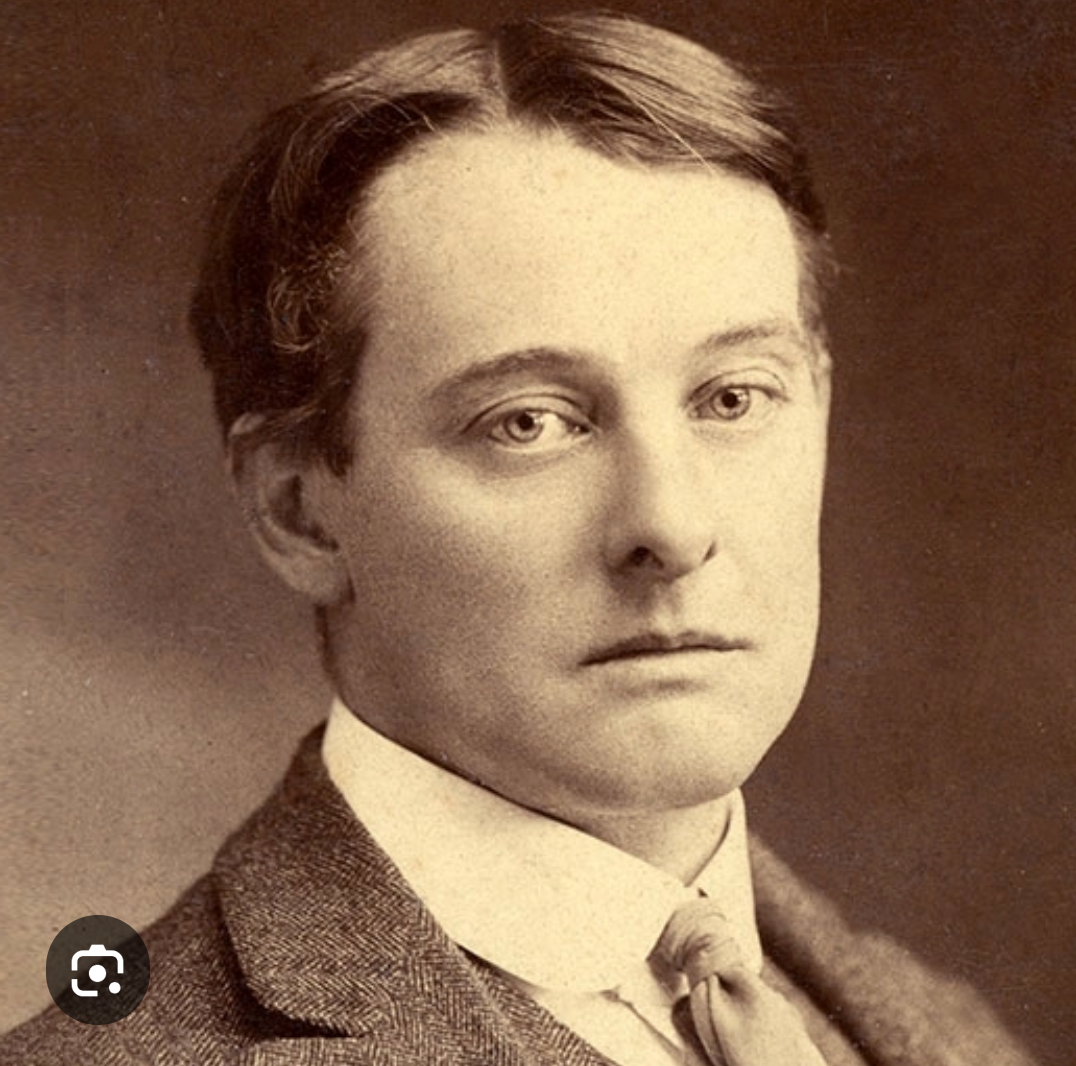
Lord Alfred Douglas — known to history as “Bosie” — was the beautiful, reckless lover who destroyed Oscar Wilde. That story is true, but it is not the whole truth. Behind the golden boy who laughed through the West End in the 1890s was a child beaten by a violent father, a gifted poet whose work has been almost forgotten, and a man who spent half a century trying to make sense of the wreckage his youth had left behind.
This Lord Alfred Douglas biography tells the full story. Bosie Douglas lived to be seventy-four years old. Oscar Wilde knew him for only nine of those years, yet Wilde’s ghost followed him through marriage, conversion, imprisonment, poverty, and a long, bitter old age. This is the story not just of the trials and the scandal, but of what came before and what came after — the portrait of a soul that was both destroyer and destroyed.
Lord Alfred Douglas: The Golden Boy of Oxford
Lord Alfred Douglas was born on 22 October 1870 into one of Scotland’s oldest aristocratic families. He should have had everything: wealth, beauty, title, and talent. What he also inherited was violence, madness, and a family curse that ran through the Douglas bloodline like poison.
At Oxford in the early 1890s, Bosie Douglas was dazzling. Photographs show a face of almost unnatural beauty — classical features, golden curls, eyes that seemed to promise both innocence and mischief. Wilde, who had an artist’s eye for beauty, called him “like a narcissus — white and gold.” Others were less kind about what lay beneath the surface: spoiled, petulant, extravagant, capable of sudden rages that echoed his father’s volcanic temper.
But Bosie was also genuinely talented. At Oxford he edited an undergraduate journal called The Spirit Lamp, which published homoerotic poetry at a time when such work could end careers — or worse. His own poems showed real craft, particularly his sonnets. One of them, “Two Loves,” contained the line that would haunt both him and Wilde: “I am the Love that dare not speak its name.” The phrase was Bosie’s, not Wilde’s, though history has often credited it to the older man.
He was brilliant, beautiful, and damaged. And he was about to meet someone who would see all three.
The Shadow of Queensberry
To understand Bosie, you must understand his father. John Sholto Douglas, 9th Marquess of Queensberry, was a man at war with the world and with himself. A famous boxing patron, an atheist who refused to take his seat in Parliament rather than swear a Christian oath, and a father whose temper was legendary even in an age that tolerated domestic violence.
Bosie’s childhood was marked by his parents’ vicious divorce, his father’s cruelty, and the knowledge that madness and suicide ran through the Douglas family like a hereditary disease. His grandfather had killed himself. So had his uncle. Later, his eldest brother would do the same. The family seemed cursed, and the Marquess — brilliant, angry, and increasingly unstable — embodied that curse.
Bosie grew up hating his father with a passion that would shape the rest of his life. When he met Oscar Wilde in 1891, he found not just a lover but a weapon — a famous, witty, successful man who represented everything his father despised. Their relationship was many things, but it was also, from Bosie’s perspective, an act of revenge.
For readers who want to understand the twisted Douglas family dynamics, Linda Stratmann’s The Marquess of Queensberry: Wilde’s Nemesis offers a deeply researched portrait of Bosie’s father — not as a simple villain, but as a grief-stricken, damaged man whose violence shaped his son’s fate.
Oscar Wilde and Bosie: Meeting the Genius
When Bosie met Oscar Wilde in the summer of 1891, Wilde was at the height of his fame: celebrated playwright, brilliant conversationalist, the most fashionable writer in London. Bosie was twenty, achingly beautiful, and desperate for someone to see past his face to the turmoil underneath.
They became lovers almost immediately. The relationship was passionate, chaotic, and unequal. Wilde was seventeen years older, famous, and — despite his wit — fundamentally kind. Bosie was young, spoiled, cruel when crossed, and capable of a love that was both genuine and destructive. He adored being seen with Wilde, being part of that glittering circle, being taken seriously as a poet by a man whose opinion mattered.
But he could also be petulant, demanding, and careless. When Wilde was ill, Bosie reportedly said, “When you are not on your pedestal you are not interesting.” It was the kind of remark that cuts deep because it contains a grain of truth — Bosie loved Wilde the celebrity more reliably than he loved Wilde the man.
Still, there was real affection between them. Wilde’s letters to Bosie (written in green ink, Bosie’s favourite colour) show tenderness alongside exasperation. They travelled together, quarrelled constantly, made up extravagantly. It was the kind of relationship that burns bright and hot — the kind that was never going to end well.
The Destroyer and the Destroyed
When Queensberry began his campaign against Wilde in early 1895, leaving the infamous calling card accusing him of “posing as somdomite,” Bosie’s response was immediate and disastrous: sue. Fight back. Destroy his father in court. Use Wilde as the weapon.
Wilde’s friends and lawyers begged him not to pursue the libel case. They knew it was suicide. But Bosie pushed hard, and Wilde — exhausted, in love, unable to bear being called a coward — agreed. The case collapsed spectacularly when Queensberry’s lawyers produced evidence of Wilde’s relationships with young men. Within days, Wilde himself was arrested.
Bosie fled to France. He wrote anguished letters, made grand promises, spoke of standing by Wilde. But he did not return for the trials. He did not testify. Wilde stood alone in the dock, and Bosie was not there.
After Wilde’s conviction and imprisonment, Bosie did send money, did write letters, did speak publicly in Wilde’s defence. But the damage was done. In prison, Wilde wrote the long, devastating letter later published as De Profundis — a work that is part love letter, part accusation, and part spiritual reckoning.
The letter begins “Dear Bosie” and lays bare everything: the quarrels, the extravagance, the carelessness, the way Bosie’s beauty and cruelty had nearly destroyed Wilde even before the trials did. Yet even in anger, Wilde’s love shows through. He calls Bosie “the gilt and gracious boy” and “the rose-leaf and the ruin.” It is one of the most painful documents in literary history.
Readers wanting to understand this complex, devastating relationship should explore Douglas Murray’s biography Bosie, which draws on previously unpublished letters and manuscripts to reveal both the love and the damage in forensic detail.
The Fifty Years After
Wilde died in Paris in November 1900, aged forty-six, broken by prison and exile. Bosie was thirty years old. He had more than half his life still ahead of him, and he would spend almost all of it trying to escape, explain, or rewrite what had happened.
In 1902 he married Olive Custance, a poet herself, and they had a son, Raymond. The marriage was a genuine attempt at conventional respectability, but it could not survive Bosie’s debts, his feuds, or his inability to stop fighting old battles. They separated in 1913.
In 1911 Bosie converted to Roman Catholicism and publicly renounced his past. He began to speak of homosexuality with disgust, to distance himself from Wilde, and to insist that their relationship had been purely platonic — a rewriting of history so transparent that even sympathetic friends found it painful.
He threw himself into editing and journalism, running magazines that became platforms for his increasingly bitter worldview. He sued and was sued constantly. He fought legal battles with Wilde’s literary executor, Robert Ross, with such venom that it destroyed what was left of his literary reputation.
Then, in 1923, he made the mistake that finally broke him. In his magazine he accused Winston Churchill of issuing a false communiqué during World War I. Churchill sued for criminal libel. Bosie lost and was sentenced to six months in Wormwood Scrubs — the same kind of hard labour prison that had destroyed Wilde nearly thirty years earlier.
Prison and Understanding
Something changed in Bosie during those six months in Wormwood Scrubs. For the first time in his life, he experienced what Wilde had endured: the brutality, the degradation, the grinding daily horror of Victorian hard labour. He wrote later that he finally understood Wilde’s suffering — not as an abstract idea, but as a physical and spiritual reality.
In prison he wrote a sonnet sequence called In Excelsis — “in the heights” — an ironic title for poetry written from the depths. The work showed a maturity and compassion that had been largely absent from his earlier writing. He emerged humbled, gentler, more willing to acknowledge his own failures.
But by then it was too late. His reputation was destroyed, his money was gone, and the world had moved on. The bright young thing of the 1890s was now a middle-aged man haunted by ghosts.
Lord Alfred Douglas: The Forgotten Poet
One of the great tragedies of Bosie’s life is that his poetry — which was genuinely good — has been almost entirely forgotten. Lord Alfred Douglas as a poet deserves recognition beyond the scandal. His sonnets, particularly his early work, show real mastery of form and a gift for emotional complexity that should have secured him a place in literary history.
But genius needs more than talent; it needs luck, and Bosie’s luck ran out in 1895. After the Wilde trials, everything he wrote was read through the lens of scandal. His later poetry, much of it religious and confessional, was overshadowed by his feuds and lawsuits.
The Collected Poems of Lord Alfred Douglas gathers his life’s work — from the homoerotic beauty of “Two Loves” to the mature religious sonnets of his later years. Reading them now, stripped of scandal, reveals a poet whose technical skill and emotional honesty deserved better than history gave him.
The critic and writer Douglas Murray has argued that Bosie was one of the finest sonnet writers of his generation, comparable to Shakespeare in his command of the form. Whether that claim is overstated or not, the poems themselves speak clearly: here was real talent, not just reflected glory from Wilde.
The Long Twilight
Bosie lived until March 1945, dying just weeks before World War II ended in Europe. By then he was a forgotten man — the last survivor of a scandal that most people knew only as a footnote to Wilde’s biography.
He lived in poverty, supported by a few loyal friends and a small allowance. His last photographs show a withered old man, unrecognisable from the golden boy whose beauty had once stopped conversations. He had outlived his parents, his siblings, his fame, and his notoriety. He had even outlived most people’s memory of what he had done.
In his final years, something like peace seems to have settled over him. He spoke more kindly of Wilde, acknowledged more freely his own failures, and retreated into a quiet Catholicism that offered, if not absolution, at least the hope of it.
When he died, the obituaries were brief and often cruel. The man who had been called the most beautiful undergraduate in England was remembered primarily as the person who destroyed Oscar Wilde. It was not entirely unfair, but it was not entirely true either.
How to Remember Bosie
Lord Alfred Douglas remains one of the most difficult figures in Victorian literary history to assess fairly. He was genuinely talented, genuinely damaged, and genuinely destructive. He loved Wilde, and he ruined him. He wrote beautiful poetry, and he wasted his gifts in feuds and bitterness. He lived to seventy-four, but in many ways his life ended at twenty-five.
The truth about Bosie is that there is no single truth. He was the beautiful boy and the bitter old man. He was the gifted poet and the litigious crank. He was loved and deserved to be loved; he was cruel and deserved to be condemned. Most of us are contradictions, but Bosie lived his contradictions on a public stage and paid the price in full.
What survives, beyond the scandal, is the work. The poems — especially the early ones — still sing with their technical mastery and emotional honesty. The story of his relationship with Wilde remains one of literature’s great tragic romances, complicated and painful and real.
And perhaps there is something to learn from that long, strange life: that beauty and talent are not the same as wisdom, that love and destruction can be two sides of the same coin, and that some people spend their whole lives trying to outrun their youth and never quite succeed.
Bosie died in a small flat in Hove, largely alone, largely forgotten. But his poems remain, and they deserve to be read not as the footnotes to someone else’s tragedy but as the work of a genuine, if flawed, artist. That, perhaps, is the kindest and most honest way to remember him.
Further Reading
For Bosie’s Life Story
Bosie: A Biography of Lord Alfred Douglas by Douglas Murray
The definitive modern biography, written when Murray was just nineteen. Draws on unpublished letters and manuscripts to create a nuanced portrait that neither condemns nor excuses.
For His Poetry
The Collected Poems of Lord Alfred Douglas
The complete poetic works, from the homoerotic brilliance of his Oxford years to the religious sonnets of his later life. Essential for understanding Bosie as an artist rather
Lord Alfred Douglas: The Beautiful Boy Who Haunted Oscar Wilde
Poet, lover, destroyer — and the man who lived fifty years in Wilde’s shadow
Lord Alfred Douglas — known to history as “Bosie” — was the beautiful, reckless lover who destroyed Oscar Wilde. That story is true, but it is not the whole truth. Behind the golden boy who laughed through the West End in the 1890s was a child beaten by a violent father, a gifted poet whose work has been almost forgotten, and a man who spent half a century trying to make sense of the wreckage his youth had left behind.
This Lord Alfred Douglas biography tells the full story. Bosie Douglas lived to be seventy-four years old. Oscar Wilde knew him for only nine of those years, yet Wilde’s ghost followed him through marriage, conversion, imprisonment, poverty, and a long, bitter old age. This is the story not just of the trials and the scandal, but of what came before and what came after — the portrait of a soul that was both destroyer and destroyed.
Lord Alfred Douglas: The Golden Boy of Oxford
Lord Alfred Douglas was born on 22 October 1870 into one of Scotland’s oldest aristocratic families. He should have had everything: wealth, beauty, title, and talent. What he also inherited was violence, madness, and a family curse that ran through the Douglas bloodline like poison.
At Oxford in the early 1890s, Bosie Douglas was dazzling. Photographs show a face of almost unnatural beauty — classical features, golden curls, eyes that seemed to promise both innocence and mischief. Wilde, who had an artist’s eye for beauty, called him “like a narcissus — white and gold.” Others were less kind about what lay beneath the surface: spoiled, petulant, extravagant, capable of sudden rages that echoed his father’s volcanic temper.
But Bosie was also genuinely talented. At Oxford he edited an undergraduate journal called The Spirit Lamp, which published homoerotic poetry at a time when such work could end careers — or worse. His own poems showed real craft, particularly his sonnets. One of them, “Two Loves,” contained the line that would haunt both him and Wilde: “I am the Love that dare not speak its name.” The phrase was Bosie’s, not Wilde’s, though history has often credited it to the older man.
He was brilliant, beautiful, and damaged. And he was about to meet someone who would see all three.
The Shadow of Queensberry
To understand Bosie, you must understand his father. John Sholto Douglas, 9th Marquess of Queensberry, was a man at war with the world and with himself. A famous boxing patron, an atheist who refused to take his seat in Parliament rather than swear a Christian oath, and a father whose temper was legendary even in an age that tolerated domestic violence.
Bosie’s childhood was marked by his parents’ vicious divorce, his father’s cruelty, and the knowledge that madness and suicide ran through the Douglas family like a hereditary disease. His grandfather had killed himself. So had his uncle. Later, his eldest brother would do the same. The family seemed cursed, and the Marquess — brilliant, angry, and increasingly unstable — embodied that curse.
Bosie grew up hating his father with a passion that would shape the rest of his life. When he met Oscar Wilde in 1891, he found not just a lover but a weapon — a famous, witty, successful man who represented everything his father despised. Their relationship was many things, but it was also, from Bosie’s perspective, an act of revenge.
For readers who want to understand the twisted Douglas family dynamics, Linda Stratmann’s The Marquess of Queensberry: Wilde’s Nemesis offers a deeply researched portrait of Bosie’s father — not as a simple villain, but as a grief-stricken, damaged man whose violence shaped his son’s fate.
Oscar Wilde and Bosie: Meeting the Genius
When Bosie met Oscar Wilde in the summer of 1891, Wilde was at the height of his fame: celebrated playwright, brilliant conversationalist, the most fashionable writer in London. Bosie was twenty, achingly beautiful, and desperate for someone to see past his face to the turmoil underneath.
They became lovers almost immediately. The relationship was passionate, chaotic, and unequal. Wilde was seventeen years older, famous, and — despite his wit — fundamentally kind. Bosie was young, spoiled, cruel when crossed, and capable of a love that was both genuine and destructive. He adored being seen with Wilde, being part of that glittering circle, being taken seriously as a poet by a man whose opinion mattered.
But he could also be petulant, demanding, and careless. When Wilde was ill, Bosie reportedly said, “When you are not on your pedestal you are not interesting.” It was the kind of remark that cuts deep because it contains a grain of truth — Bosie loved Wilde the celebrity more reliably than he loved Wilde the man.
Still, there was real affection between them. Wilde’s letters to Bosie (written in green ink, Bosie’s favourite colour) show tenderness alongside exasperation. They travelled together, quarrelled constantly, made up extravagantly. It was the kind of relationship that burns bright and hot — the kind that was never going to end well.
The Destroyer and the Destroyed
When Queensberry began his campaign against Wilde in early 1895, leaving the infamous calling card accusing him of “posing as somdomite,” Bosie’s response was immediate and disastrous: sue. Fight back. Destroy his father in court. Use Wilde as the weapon.
Wilde’s friends and lawyers begged him not to pursue the libel case. They knew it was suicide. But Bosie pushed hard, and Wilde — exhausted, in love, unable to bear being called a coward — agreed. The case collapsed spectacularly when Queensberry’s lawyers produced evidence of Wilde’s relationships with young men. Within days, Wilde himself was arrested.
Bosie fled to France. He wrote anguished letters, made grand promises, spoke of standing by Wilde. But he did not return for the trials. He did not testify. Wilde stood alone in the dock, and Bosie was not there.
After Wilde’s conviction and imprisonment, Bosie did send money, did write letters, did speak publicly in Wilde’s defence. But the damage was done. In prison, Wilde wrote the long, devastating letter later published as De Profundis — a work that is part love letter, part accusation, and part spiritual reckoning.
The letter begins “Dear Bosie” and lays bare everything: the quarrels, the extravagance, the carelessness, the way Bosie’s beauty and cruelty had nearly destroyed Wilde even before the trials did. Yet even in anger, Wilde’s love shows through. He calls Bosie “the gilt and gracious boy” and “the rose-leaf and the ruin.” It is one of the most painful documents in literary history.
Readers wanting to understand this complex, devastating relationship should explore Douglas Murray’s biography Bosie, which draws on previously unpublished letters and manuscripts to reveal both the love and the damage in forensic detail.
The Fifty Years After
Wilde died in Paris in November 1900, aged forty-six, broken by prison and exile. Bosie was thirty years old. He had more than half his life still ahead of him, and he would spend almost all of it trying to escape, explain, or rewrite what had happened.
In 1902 he married Olive Custance, a poet herself, and they had a son, Raymond. The marriage was a genuine attempt at conventional respectability, but it could not survive Bosie’s debts, his feuds, or his inability to stop fighting old battles. They separated in 1913.
In 1911 Bosie converted to Roman Catholicism and publicly renounced his past. He began to speak of homosexuality with disgust, to distance himself from Wilde, and to insist that their relationship had been purely platonic — a rewriting of history so transparent that even sympathetic friends found it painful.
He threw himself into editing and journalism, running magazines that became platforms for his increasingly bitter worldview. He sued and was sued constantly. He fought legal battles with Wilde’s literary executor, Robert Ross, with such venom that it destroyed what was left of his literary reputation.
Then, in 1923, he made the mistake that finally broke him. In his magazine he accused Winston Churchill of issuing a false communiqué during World War I. Churchill sued for criminal libel. Bosie lost and was sentenced to six months in Wormwood Scrubs — the same kind of hard labour prison that had destroyed Wilde nearly thirty years earlier.
Prison and Understanding
Something changed in Bosie during those six months in Wormwood Scrubs. For the first time in his life, he experienced what Wilde had endured: the brutality, the degradation, the grinding daily horror of Victorian hard labour. He wrote later that he finally understood Wilde’s suffering — not as an abstract idea, but as a physical and spiritual reality.
In prison he wrote a sonnet sequence called In Excelsis — “in the heights” — an ironic title for poetry written from the depths. The work showed a maturity and compassion that had been largely absent from his earlier writing. He emerged humbled, gentler, more willing to acknowledge his own failures.
But by then it was too late. His reputation was destroyed, his money was gone, and the world had moved on. The bright young thing of the 1890s was now a middle-aged man haunted by ghosts.
Lord Alfred Douglas: The Forgotten Poet
One of the great tragedies of Bosie’s life is that his poetry — which was genuinely good — has been almost entirely forgotten. Lord Alfred Douglas as a poet deserves recognition beyond the scandal. His sonnets, particularly his early work, show real mastery of form and a gift for emotional complexity that should have secured him a place in literary history.
But genius needs more than talent; it needs luck, and Bosie’s luck ran out in 1895. After the Wilde trials, everything he wrote was read through the lens of scandal. His later poetry, much of it religious and confessional, was overshadowed by his feuds and lawsuits.
The Collected Poems of Lord Alfred Douglas gathers his life’s work — from the homoerotic beauty of “Two Loves” to the mature religious sonnets of his later years. Reading them now, stripped of scandal, reveals a poet whose technical skill and emotional honesty deserved better than history gave him.
The critic and writer Douglas Murray has argued that Bosie was one of the finest sonnet writers of his generation, comparable to Shakespeare in his command of the form. Whether that claim is overstated or not, the poems themselves speak clearly: here was real talent, not just reflected glory from Wilde.
The Long Twilight
Bosie lived until March 1945, dying just weeks before World War II ended in Europe. By then he was a forgotten man — the last survivor of a scandal that most people knew only as a footnote to Wilde’s biography.
He lived in poverty, supported by a few loyal friends and a small allowance. His last photographs show a withered old man, unrecognisable from the golden boy whose beauty had once stopped conversations. He had outlived his parents, his siblings, his fame, and his notoriety. He had even outlived most people’s memory of what he had done.
In his final years, something like peace seems to have settled over him. He spoke more kindly of Wilde, acknowledged more freely his own failures, and retreated into a quiet Catholicism that offered, if not absolution, at least the hope of it.
When he died, the obituaries were brief and often cruel. The man who had been called the most beautiful undergraduate in England was remembered primarily as the person who destroyed Oscar Wilde. It was not entirely unfair, but it was not entirely true either.
How to Remember Bosie
Lord Alfred Douglas remains one of the most difficult figures in Victorian literary history to assess fairly. He was genuinely talented, genuinely damaged, and genuinely destructive. He loved Wilde, and he ruined him. He wrote beautiful poetry, and he wasted his gifts in feuds and bitterness. He lived to seventy-four, but in many ways his life ended at twenty-five.
The truth about Bosie is that there is no single truth. He was the beautiful boy and the bitter old man. He was the gifted poet and the litigious crank. He was loved and deserved to be loved; he was cruel and deserved to be condemned. Most of us are contradictions, but Bosie lived his contradictions on a public stage and paid the price in full.
What survives, beyond the scandal, is the work. The poems — especially the early ones — still sing with their technical mastery and emotional honesty. The story of his relationship with Wilde remains one of literature’s great tragic romances, complicated and painful and real.
And perhaps there is something to learn from that long, strange life: that beauty and talent are not the same as wisdom, that love and destruction can be two sides of the same coin, and that some people spend their whole lives trying to outrun their youth and never quite succeed.
Bosie died in a small flat in Hove, largely alone, largely forgotten. But his poems remain, and they deserve to be read not as the footnotes to someone else’s tragedy but as the work of a genuine, if flawed, artist. That, perhaps, is the kindest and most honest way to remember him.
Further Reading
For Bosie’s Life Story
Bosie: A Biography of Lord Alfred Douglas by Douglas Murray
The definitive modern biography, written when Murray was just nineteen. Draws on unpublished letters and manuscripts to create a nuanced portrait that neither condemns nor excuses.
For His Poetry
The Collected Poems of Lord Alfred Douglas
The complete poetic works, from the homoerotic brilliance of his Oxford years to the religious sonnets of his later life. Essential for understanding Bosie as an artist rather than just Wilde’s lover.