Oscar Wilde’s Wild West Adventure: Inside His 1882 America Tour
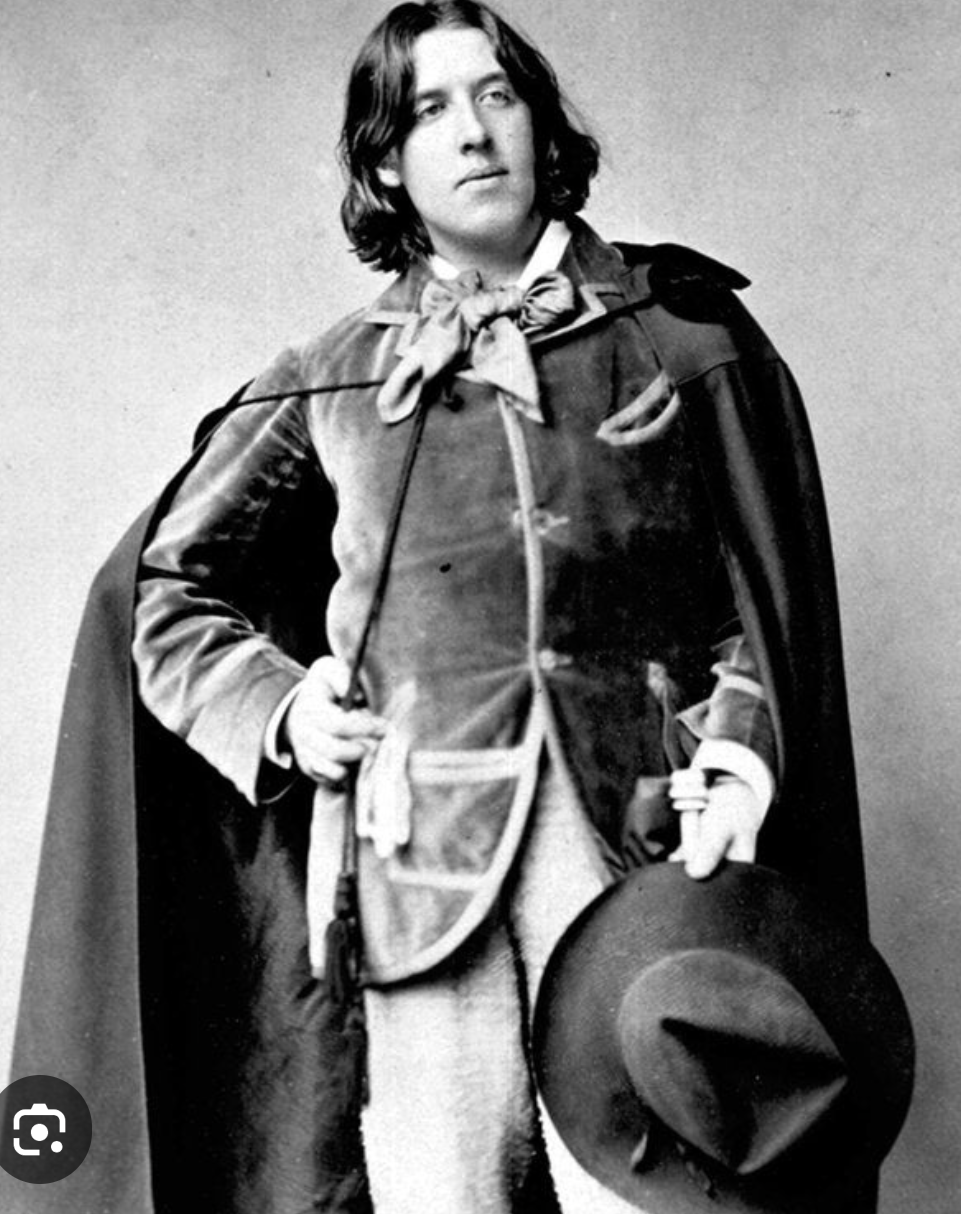
On a cold January day in 1882, a tall young Irishman in a velvet coat stepped off the SS Arizona in New York harbor and into American legend. Newspapers had already warned the public that an apostle of beauty was coming. By the time the customs officer asked Oscar Wilde if he had anything to declare, the Oscar Wilde America tour had begun to feel less like a lecture circuit and more like a traveling theatre show.
You probably know the famous line he is supposed to have given at that moment. “I have nothing to declare except my genius.” It is a wonderful quip, neat as a stage cue. It is also almost certainly made up. There is no contemporary evidence for it; the story appears later, after Wilde’s persona has hardened into myth. Wildeans quietly enjoy pointing this out, partly because the truth is funnier. He did not need to say the line. America supplied it for him.
Why Wilde Came To America At All
Before we follow him across the continent, it helps to remember why he came. In 1882 Wilde was not yet the author of Dorian Gray or the sparkling comedies. He was a young poet whose first volume had sold modestly and been mocked rather more than it had been bought. He needed money, and he needed fame. The American producer Richard D’Oyly Carte, who was promoting Gilbert and Sullivan’s Patience, saw an opportunity.
The operetta poked fun at aesthetic poets with floppy hair and lilies. Someone had to tour America as a “real” aesthete to help the jokes land. Wilde, with his Oxford reputation, his velvet, and his absolute willingness to perform himself, was hired. The Wilde 1882 lectures would explain beauty and decorative arts to curious Americans, while also serving as a long advertisement for the opera. It was a practical gig as much as a poetic pilgrimage.
Financially, the tour mattered. Wilde received a fee plus a cut of the takings. He sent money home to support his mother. He bought new clothes on the road, sometimes faster than he could pay his tailors. By the end of the year he had earned far more than he had ever seen as a poet in London, although he did not keep as much of it as a sober accountant might have wished.
First Impressions: New York, Boston, And The Aesthetic Sermon
The first leg of the Oscar Wilde America tour centred on the eastern cities that already thought of themselves as refined. New York, Boston, Philadelphia and the like turned out to see the “high priest of the aesthetic movement.” Reporters followed him from hotel to hotel, counting his rings and measuring his hair. Some wrote about his ideas. Most wrote about his clothes.
Wilde’s opening lecture, usually titled “The English Renaissance of Art,” did not sound shocking to a modern ear. He praised the Pre-Raphaelites, argued that art should infuse everyday life, and spoke about wallpapers with the same seriousness other men reserved for foreign policy. In other words, he treated taste as a moral question. For many in his audience this was new. The aesthetic movement in America already existed in small circles, but Wilde gave it a face, a voice, and a very quotable vocabulary.
He reworked his material as he travelled. Sometimes he gave “The House Beautiful,” a talk on interior decoration. Sometimes “Art Decoration,” sometimes “The Decorative Arts.” The Wilde 1882 lectures were never exactly the same twice, but the message stayed steady. Surround yourself with beautiful things, he said, and you will become more fully human. Life is too short for ugly wallpaper.
Walt Whitman, Jefferson Davis, And Other Encounters
One of the pleasures of tracing this tour is the cast of characters Wilde meets along the way. The most famous encounter is with Walt Whitman in Camden, New Jersey. Wilde admired Whitman deeply, calling him “the grand old man of American letters.” He took the ferry, walked the dusty streets, and knocked on the door like a nervous fan.
Inside, the scene was more homely than heroic. They drank elderberry wine. Whitman’s mother pottered in and out. Wilde later said they talked about the “meaning of the great city of New York” and the future of democracy. One can imagine the younger man, eager and slightly over-dressed, soaking up every word of the shaggy American poet who had already lived through civil war and national crisis. For all his reputation as a snob, Wilde loved this rough sincerity.
At the opposite end of the political spectrum he met Jefferson Davis, former president of the Confederacy. The meeting was polite rather than intense, but it shows Wilde’s curiosity about American history and power. He wanted to see the full range of the country, from abolitionist poets to defeated rebels. This appetite for contrast runs all through the Oscar Wilde America tour, and later through his writing. He liked extremes. Middle ground bored him.
Leadville: Wilde At The Wild Edge
Nothing captures this better than the trip to Leadville, Colorado. Here the story tips briefly into farce. Leadville was a mining town, famous for its saloons and for the useful habit of shooting people who annoyed you. On paper, it was the last place to send an Irish aesthete who lectured on blue china.
Instead, Wilde seems to have loved it. He lectured in the local theatre, attended by miners in dirty boots who had been promised a night of comedy at his expense. Legend says he won them over by joking that he had “nothing to declare but my genius” and by raising a glass of whisky to the local silver. Again, we should be careful with the lines; he did say very funny things, but the wording has been polished over time. What matters is that the audience ended up cheering him, not booing.
Afterwards he joined them underground, descending into the mine, where the men demonstrated how they worked. At one point they fired their pistols into the ceiling so that Wilde could claim he had been “shot at by his audience.” It is a ridiculous image. Velvet coat, gas lamps, revolvers, and an education in geology all crammed into the same anecdote. Yet it tells us a lot about Wilde American reception. For every critic who mocked him as a fad, there were crowds who enjoyed the good humour and were quite willing to listen to his ideas about beauty.
How The American Press Saw Him
The press followed Wilde everywhere. Cartoonists drew him as a giant sunflower, as a languid prince, as an absurd peacock. One magazine showed him as a new kind of “buffalo” being hunted by reporters. Another gave instructions on how to grow hair like his. If modern celebrity culture had existed, he would have trended daily.
The Wilde American reception in newspapers swung between open ridicule and cautious admiration. Some reviewers insisted that his aesthetic talk was nonsense, a passing English craze. Others found that when they actually sat through the lecture, the substance was better than they expected. He argued clearly, quoted from Ruskin, and knew his art history. The outer performance was flamboyant, but the inner argument had weight.
Wilde understood this double game. He once remarked that it was better to be talked about than not talked about at all. The caricatures irritated him, but they also filled halls. As David M. Friedman argues in his detailed account of the tour, Wilde became the first person to understand that fame could launch a career as well as cap one. In a sense the American press collaborated in the creation of “Oscar Wilde” as a capital-letter persona. The costume, the drawling epigrams, the notion that he could decorate a continent by talking at it for an hour, all solidified under their constant attention.
He once remarked that it was better to be talked about than not talked about at all. The caricatures irritated him, but they also filled halls. In a sense the American press collaborated in the creation of “Oscar Wilde” as a capital-letter persona. The costume, the drawling epigrams, the notion that he could decorate a continent by talking at it for an hour, all solidified under their constant attention.The Aesthetic Movement In America
Of course, Wilde did not bring beauty to a barren wilderness. The aesthetic movement in America already had its own writers, designers, and craftspeople. What he did was focus the spotlight. He turned a scattered set of tastes into something that felt like a movement you could join, or mock, or both.
After the tour, magazines carried more articles on interior design, on colour harmonies, on Japanese prints and “artistic” dress. Household goods were advertised as “aesthetic” in style. Some of it was shallow fashion, but some of it was serious. Architects and decorators took the chance to argue for better design in public buildings and homes. The idea that an ordinary American parlour could be a work of art no longer sounded eccentric.
It is fascinating to consider how ideas travel here. Ruskin and Morris write in England, Wilde popularises and dramatises their arguments, and then his tour sells those ideas to audiences in Chicago, St Louis, or San Francisco. The chain is messy rather than tidy. Yet without the Oscar Wilde America tour, the aesthetic gospel might have stayed confined to East Coast elites. Instead it touched towns where the main decoration had previously been spittoons and gun racks.
Changes In Wilde Himself
Tours do not only change the places visited. They change the traveller. By the time Wilde sailed back to Britain in late 1882, he was not quite the same man who had arrived. He had learned how to hold an audience of a thousand people with his voice alone. He had seen boom towns, slums, skyscrapers rising from muddy streets, and the growing confidence of a young nation.
You can feel the American experience echoing through later works. His quick sketches of crowd behaviour, his love of sharp contrast, his instinct for turning social types into comic characters, all gained new material from the road. Some critics even hear a touch of Whitman in the more expansive passages of his essays, a loosened rhythm that sits oddly but interestingly beside his classical education. One can imagine him remembering Leadville when he wrote the more outrageous scenes of The Importance of Being Earnest. Once you have told jokes underground to armed miners, a London drawing room must feel easy.
He also discovered his own stamina. The Wilde 1882 lectures ran to more than 140 appearances, often with long train journeys between them. He coped with bad hotels, hostile reviews, lost luggage, and the occasional empty hall. The elegant idler of myth turns out to have been a hard-working professional who could stand on a stage night after night and keep going. That resilience would be needed later, both for theatrical success and, sadly, for public disgrace and imprisonment.
Counting The Money
We should come back to the practical side for a moment. The tour had been arranged as a business venture, and Wilde was keenly aware of the numbers. He sometimes complained when a promoter under-advertised a lecture or when a hall turned out to be smaller than promised. He watched box office figures, argued over expenses, and tried to raise his fee once his fame grew.
Exactly how much he cleared is hard to pin down. Estimates vary, but even the cautious ones suggest that he earned several thousand pounds in modern terms. Some of it went on debts; some of it went on gifts and clothes; some simply evaporated in the way money often does on the road. Still, the financial security, however temporary, gave him breathing space to write when he returned to London. Without the income from the Oscar Wilde America tour, the later plays might have taken much longer to arrive.
Laughing With Wilde, Not At Him
One of the best things about following this story is how often Wilde makes people laugh with him rather than at him. He was capable of being cutting, but in America he usually aimed for warmth. Asked in a rough bar whether he liked bob-tailed mules, he is said to have replied that he adored all “dumb animals,” at which point the questioner cheerfully backed off. In another town he explained that he wore his long hair because it saved on barbers’ bills, a joke that went down well with frugal audiences.
Even when stories have been polished or invented by later writers, they fit the pattern. The myth of the customs quip persists because it feels true to the kind of thing he would have said. Part of being a Wilde enthusiast is enjoying these tales while also enjoying the detective work of sorting fact from embroidery. The line between history and theatre is thin, and he knew it.
What The Tour Left Behind
By the time Wilde boarded the ship back to Europe at the end of 1882, America had helped to create the version of him that the world remembers. The velvet, the epigrams, the stance as public defender of beauty, all had been sharpened by a year of constant exposure. At the same time, the country itself had gained something from the encounter. The aesthetic movement in America had a new public profile. Ordinary readers had heard a persuasive case for paying attention to colour, proportion, and style in everyday life.
If we step back for a moment, the whole thing looks a little unlikely. A young Irish graduate, with one slim volume of verse to his name, crosses the Atlantic to tell miners and shopkeepers why their curtains matter. Yet the story worked. The Wilde American reception was noisy, sometimes cruel, often amused, but rarely indifferent. People turned up. They argued about him in editorials and cartoon captions. They went home to look at their parlours with fresh, and sometimes suspicious, eyes.
In that sense, the 1882 journey was not just a warm-up act for later fame. It was a genuine exchange between a developing writer and a young, confident nation. The Oscar Wilde who would later dominate the London stage grew up on American trains and in American lecture halls, learning how far a joke could stretch and how an idea could be smuggled inside a laugh. And the America that listened to him carried away a slightly sharper sense that beauty is not a luxury stuck on at the end of life, but part of how life is lived at all.
So when we talk about the great phase of Wilde’s career, it is worth keeping a soft spot for that earlier, slightly awkward figure in velvet, stepping onto the New York dock. The tour gave him money, material, and confidence. It gave American culture a new way of talking about taste. Both sides came away changed. For one crowded year, the Oscar Wilde America tour turned the pursuit of beauty into a national spectacle, and the echoes of that noisy, charming adventure are still with us.
Further Reading & Resources
If Oscar Wilde’s American adventure has captured your imagination and you want to explore this transformative year in greater depth, these books offer invaluable perspectives:
- Wilde in America: Oscar Wilde and the Invention of Modern Celebrity by David M. Friedman – A fascinating account of how Wilde created the template for modern fame during his 1882 tour
- Oscar Wilde in America: The Interviews edited by Matthew Hofer & Gary Scharnhorst – Contains transcripts of Wilde’s actual American interviews, offering his voice directly from 1882
- Oscar Wilde by Richard Ellmann – The classic, compassionate Pulitzer Prize-winning biography with extensive coverage of the American tour
Related Articles
- Lady Speranza Wilde: Poet, Patriot, and Mother of a Legend
- Constance Wilde: Author, Mother, and the Woman Behind Oscar Wilde’s Legend
- Sir William Wilde: Scandal, Silence, and the Shadow Over Oscar
✒️ ✨ Wilde Reflections
“Every story deserves a reply — even those told in wit, wounds, and Wilde.”
Share your reflection, question, or favourite line below.