Robbie Ross: The Man Who Saved Oscar Wilde’s Legacy
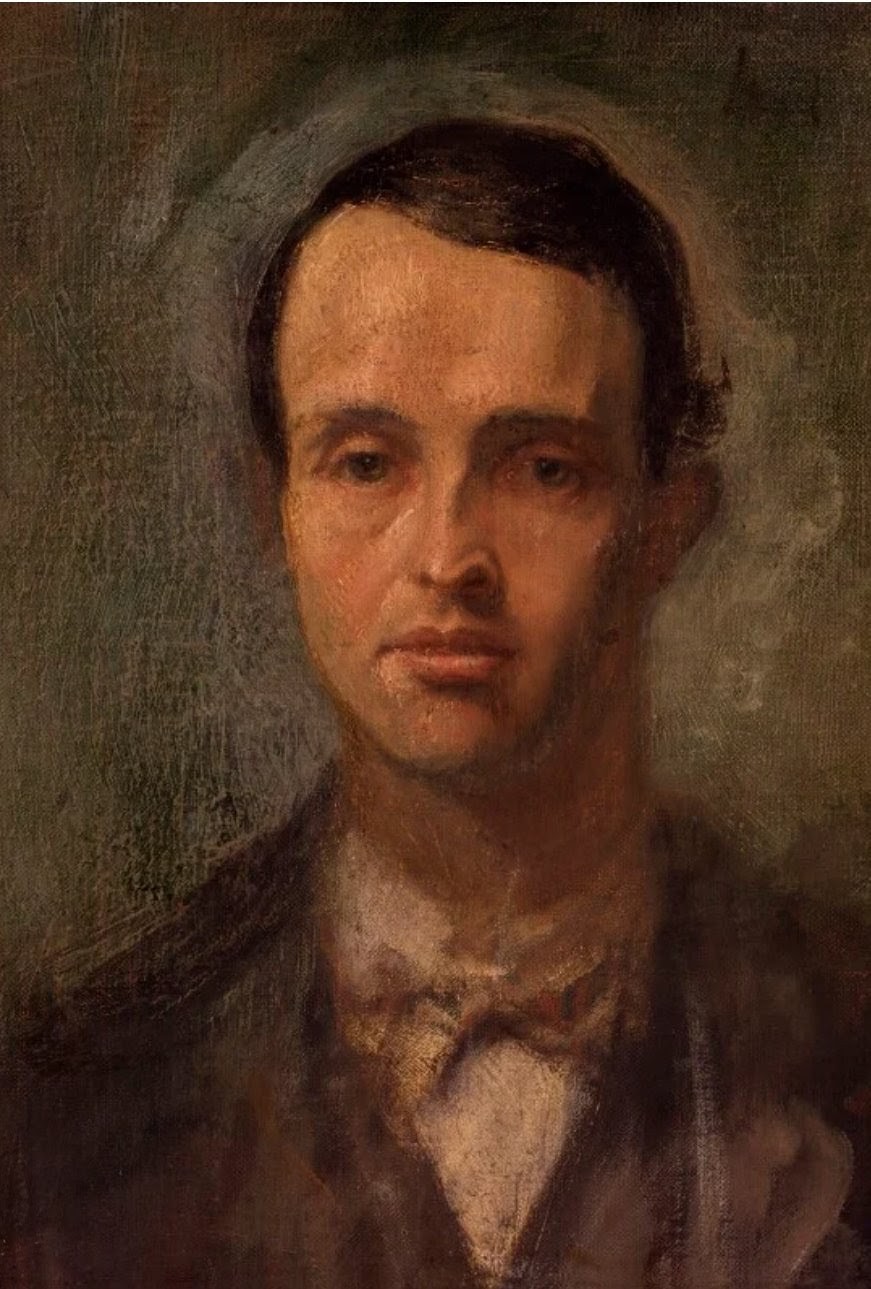
Portrait of Robbie Ross
When Oscar Wilde died in a shabby Paris hotel room on 30 November 1900, only three people stood by his bedside. One of them was Robert Baldwin Ross—the man who would spend the next eighteen years of his life fighting to restore the reputation of a friend the world had abandoned. While others fled from association with Wilde’s scandalous name, Ross rolled up his sleeves and went to work.
It’s a story of devotion that goes far beyond friendship, and one that reveals a man whose courage and determination ultimately gave us the Oscar Wilde we celebrate today.
The Canadian Aristocrat Who Chose Literary London
Born in Tours, France, on 25 May 1869, Robert Baldwin Ross came from impeccable Canadian stock. His grandfather, Robert Baldwin, had been a driving force behind Canadian autonomy from Britain, serving as joint premier of the Province of Canada in the 1840s. His father, John Ross, held prominent positions in colonial government, including Speaker of the Senate. When John Ross died in 1871, young Robbie was only two years old.
His mother, Elizabeth Baldwin Ross, made a decision that would shape her youngest son’s destiny: she moved the family to London, believing her children would receive a superior education there. It was a choice that would place Robbie at the heart of one of literature’s most fascinating circles.
The circumstances of how Ross first met Oscar Wilde remain disputed, but by 1886, when Ross was just seventeen and Wilde thirty-two, their paths had crossed. By 1887, Ross was boarding at the Wilde family home in London. The relationship between the young Canadian and the celebrated writer marked a transformation in both their lives. Though their romantic involvement was brief, they forged a friendship that would prove unbreakable.
Ross went up to Cambridge, but his time there was marred by bullying—likely because he made no secret of his sexuality in an era when such openness required extraordinary courage. He left without completing his degree and turned to journalism, eventually becoming a respected art critic. But it was his connection to Wilde that would define his legacy.
Standing in the Storm
When disaster struck in 1895, Ross proved his mettle. As Wilde’s libel case against the Marquess of Queensberry collapsed and criminal charges loomed, Ross was there. He found Wilde at the Cadogan Hotel with Reginald Turner, both men urging Oscar to catch a boat-train to France. Wilde refused to flee.
What Ross did next showed remarkable presence of mind: he rushed to Wilde’s home and removed personal papers and manuscripts before they could be seized by prosecutors. It was an act that would preserve precious literary materials for posterity.
After Wilde’s conviction and imprisonment, many of his former admirers melted away. Not Ross. He visited Wilde in prison, providing emotional support and detailed firsthand accounts of Oscar’s physical and emotional state behind bars. He also found himself serving as a delicate intermediary between Wilde and his wife Constance, and between Wilde and Lord Alfred Douglas—a thankless role that required diplomatic skills and endless patience.
Ross even launched a fundraising campaign to pay off Wilde’s legal costs and bankruptcy debts. When Wilde was released in 1897, it was Ross who met him in Dieppe, France, helping him adjust to life outside prison walls but in permanent exile.
The Herculean Task of Literary Executor
Before his death, Wilde appointed Ross as his literary executor. It was an act of trust that would consume the next eighteen years of Ross’s life. The challenge was monumental: Wilde had died bankrupt, his estate in ruins, his work scattered and his name toxic.
Ross set about the painstaking work of tracking down and purchasing the rights to all of Wilde’s texts, which had been sold off when Wilde was declared bankrupt. He fought the rampant trade in pirated copies of Wilde’s books and, worse still, erotic works that Wilde never wrote but which were being published illegally under his name.
In 1902, Ross arranged for Wilde’s remains to be transferred from the obscure Bagneux cemetery to Père Lachaise, the most celebrated cemetery in France. He commissioned Jacob Epstein to create the magnificent modernist angel sculpture that now marks Wilde’s tomb, even requesting that Epstein design a small compartment for his own ashes—a wish that would be honored in 1950.
By 1905, Ross had carefully tested the waters with an extensively edited edition of De Profundis. The book sold in unexpectedly large numbers, signaling that the public was ready to reconsider Wilde. Emboldened, Ross produced his crowning achievement in 1908: a magnificent fourteen-volume edition of The Collected Works of Oscar Wilde. It’s difficult to overestimate how central Ross’s labors were to rehabilitating Wilde’s reputation after the devastation of 1895.
Ross also gave Wilde’s sons, Cyril and Vyvyan Holland, the rights to all their father’s works along with the money earned from their publication and performance. It was an act of extraordinary generosity—he could have enriched himself but chose instead to ensure Wilde’s children benefited from their father’s genius.
Editor, Champion, Friend
Ross contributed constructive criticism to Wilde’s The Ballad of Reading Gaol, helping to bring that powerful work to publication. He wrote introductions to various Wilde editions, including one for the German translation of the complete works. He negotiated translations across continental Europe at a time when handling Wilde material in England still required considerable bravery.
Ross was also instrumental in arranging American and European productions of Wilde’s plays when Britain was still legally bound to prohibit biblical characters on stage (which prevented Salome from being performed there). His determination ensured that Wilde’s dramatic works reached audiences who could appreciate them.
The Battle with Bosie
If Ross’s work as literary executor earned him a place in literary history, his protracted battle with Lord Alfred Douglas nearly destroyed him. Douglas, who had once been Wilde’s passionate lover, turned bitterly against both Wilde and Ross after Oscar’s death. He repudiated Wilde himself and launched a vicious campaign of attacks on Ross.
The conflict centered partly on De Profundis, Wilde’s devastating 50,000-word letter to Douglas written from Reading Prison. Ross had titled and published an edited version of the letter, which revealed Wilde’s accusations of Douglas’s vanity, treachery, and cowardice. Douglas was incensed.
In 1911, when Arthur Ransome wrote a critical study of Wilde with Ross’s assistance and referenced De Profundis, Douglas sued for libel. The jury found the passages were libelous but true. Douglas, recently declared bankrupt, had to abandon his appeal. Infuriated, he and his friend Thomas Crosland began a relentless campaign of libel against Ross.
In 1914, Ross was forced to respond to criminal libel charges against Douglas. The trial went badly for Ross, and though the jury was divided, he eventually abandoned the action and agreed to pay Douglas’s costs. The scandal forced Ross to resign from his position as valuer of pictures and drawings for the Board of Inland Revenue and effectively retire from public life.
The 1918 Persecution
The worst was yet to come. In early 1918, during the German Spring Offensive of World War I, Noel Pemberton Billing, a right-wing Member of Parliament, published an article in his journal Vigilante with the inflammatory title “The Cult of the Clitoris.” The article accused members of Ross’s circle of being among 47,000 homosexuals who were allegedly betraying Britain to the Germans—part of a supposed “Black Book” kept by German intelligence.
The article specifically targeted actress Maud Allan, who was appearing in a private production of Wilde’s Salome organized by Ross. Allan sued Billing for libel in a trial that became a national sensation. Billing conducted his own defense and called Lord Alfred Douglas as a witness, giving Douglas yet another opportunity to attack Ross publicly.
Allan lost the case. The trial brought humiliating public attention to Ross and his associates during wartime hysteria. The strain on Ross, already weakened by years of persecution from Douglas, was immense.
A Sudden End and Eternal Rest
Later in 1918, Ross was preparing to travel to Melbourne, Australia, to open an exhibition at the National Gallery of Victoria. He died suddenly in London on 5 October 1918, at the age of just forty-nine. The official cause was heart failure, but there’s little doubt that the years of legal battles, public scandal, and relentless persecution had taken their toll.
His circle of friends was extraordinary: George Bernard Shaw, Thomas Hardy, H.G. Wells, Siegfried Sassoon, Robert Graves, and Herbert Asquith. During World War I, Ross had mentored a group of young poets and artists, including Sassoon and Wilfred Owen, many of whom were same-sex oriented and found in Ross a sympathetic champion.
In 1950, on the fiftieth anniversary of Wilde’s death, Ross’s final wish was honored: an urn containing his ashes was placed in the compartment he had requested within Wilde’s tomb at Père Lachaise Cemetery. The man who had never wavered in his devotion to Oscar Wilde—through scandal, imprisonment, exile, and death—was finally reunited with his greatest friend.
The Legacy of Devotion
Without Robert Ross, Oscar Wilde might have remained a cautionary tale rather than the celebrated literary genius we know today. Ross’s work extended far beyond that of a typical literary executor. He was editor, champion, financial supporter, and faithful friend. He sacrificed his own reputation, his career, and ultimately perhaps his health to ensure that Wilde’s works would survive and his name would be cleared.
The fourteen-volume collected works Ross published in 1908 became the foundation of Wilde’s modern reputation. The texts he established still form the basis of many contemporary editions. The battles he fought—both legal and literary—gradually shifted public opinion from scandal to appreciation.
Ross’s own writing, including his book Masques and Phases, has been largely overshadowed by his work on Wilde’s behalf. As an art critic for The Morning Post and manager of the Carfax Gallery, he championed artists like Aubrey Beardsley and William Blake. But it is as Wilde’s devoted friend and defender that history remembers him.
In 2008, the University of Bradford’s LGBT Society named its library collection the Robbie Ross Liberation Library—a fitting tribute to a man who lived openly as a gay man in an era when such honesty could destroy one’s life. And it did extract a terrible cost. Yet Ross never wavered, never hid, never betrayed.
For anyone seeking to understand the Oscar Wilde story, Ross is an essential figure. Books like Jonathan Fryer’s Robbie Ross: Oscar Wilde’s Devoted Friend and Neil McKenna’s The Secret Life of Oscar Wilde explore Ross’s role in depth, revealing a man whose moral courage matched his literary dedication.
A Testament to Friendship
What makes Ross’s story so moving is its complete lack of self-interest. He gained nothing material from his devotion to Wilde—in fact, it cost him his career and peace. He could have walked away after Wilde’s death, preserved his reputation, and enjoyed a comfortable life. Instead, he spent nearly two decades fighting for a dead friend’s legacy while enduring public persecution and private torment.
The image of Ross at Wilde’s deathbed, bringing a priest so that Oscar could finally be received into the Catholic Church he’d long admired, captures something essential about the man. He was there at the end, as he had been throughout the disaster of Wilde’s trials and imprisonment. And his work continued long after Wilde’s death.
When Ross’s ashes were placed in Wilde’s tomb in 1950, it completed a circle that had begun more than six decades earlier when a seventeen-year-old Canadian boy met a charismatic Irish writer. Through scandal, persecution, and death, their bond endured. Ross had promised to stand by Wilde, and he kept that promise—not just during Wilde’s lifetime, but for eighteen years after his death.
In the end, perhaps the greatest tribute to Robert Ross is this: when we read Oscar Wilde today, when we watch his plays performed in theaters worldwide, when we celebrate his wit and genius, we are witnessing the fruits of Ross’s labor. He gave us back Oscar Wilde. And for that, we owe him our gratitude and our remembrance.
Ross lies with Wilde in Père Lachaise Cemetery, beneath Epstein’s modernist angel. The epitaph, chosen by Ross from The Ballad of Reading Gaol, reads:
And alien tears will fill for him
Pity’s long-broken urn,
For his mourners will be outcast men,
And outcasts always mourn.
It could serve as Ross’s epitaph too—the outcast who mourned, who fought, and who ultimately triumphed.
Continue Exploring Oscar Wilde’s Circle
Ada Leverson: The Sphinx Who Never Abandoned Oscar Wilde
While society turned its back on Wilde, Ada Leverson opened her home to him. Discover the brilliant wit and loyal friend who stood by Oscar through his darkest hours—and how their friendship survived scandal, imprisonment, and exile.
Constance Wilde: The Woman Behind the Scandal
She was more than “Oscar Wilde’s wife.” Constance Lloyd was an accomplished author, dedicated mother, and woman who faced impossible choices when her husband’s world collapsed. Her story deserves to be told in full.