Reggie Turner: The Quiet Friend Who Never Left Oscar Wilde’s Side
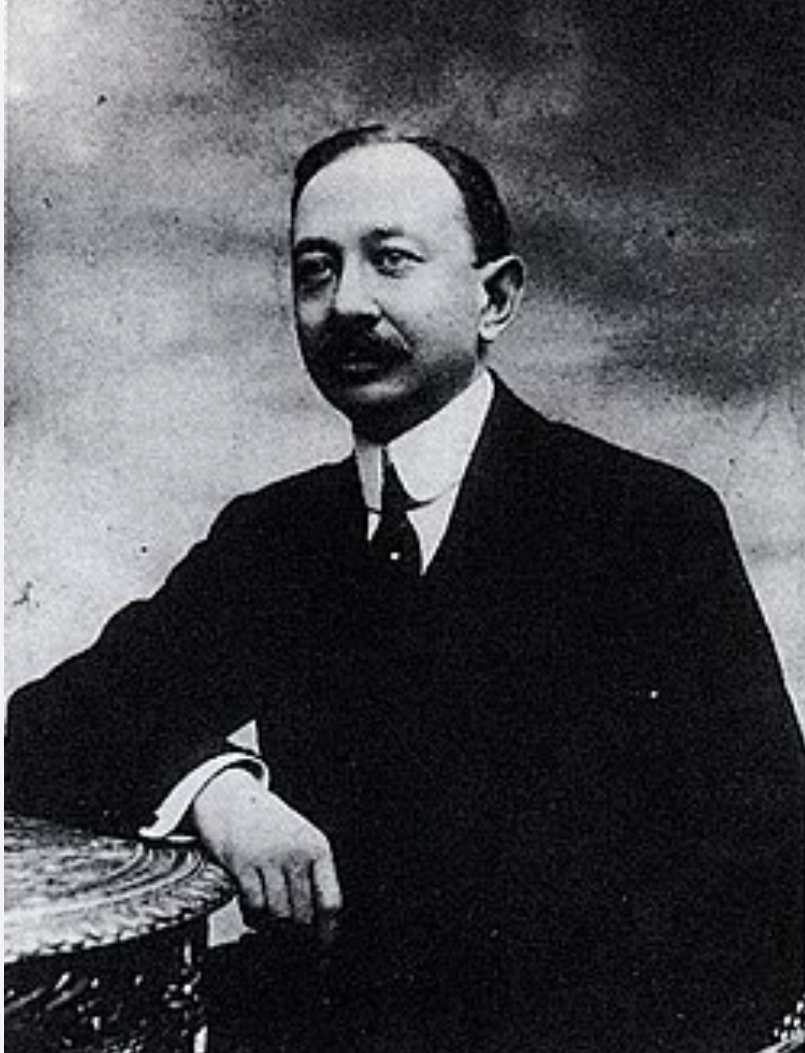
Reginald Turner
On 30 November 1900, in a shabby hotel room on Paris’s Left Bank, Oscar Wilde took his last breaths. Three men stood vigil: Robbie Ross, who would spend the next eighteen years fighting to restore Wilde’s reputation; Maurice Gilbert, who would take the final photograph; and Reginald Turner, whose name appears in almost every account of that sad day—and then seems to fade into the background of history.
This is the pattern of Reggie Turner’s entire friendship with Oscar Wilde: always present, always loyal, never demanding the spotlight. While Ross became the heroic literary executor and Lord Alfred Douglas the beautiful destroyer, Turner was simply there—at the deathbed, at the grave, in the correspondence, in the cafés of exile. He was the quiet friend, and his story deserves to be told.
The Illegitimate Son Who Made His Own Way
Reginald Turner was born in 1869, the same year as Robbie Ross, though the two men’s temperaments could hardly have been more different. Turner’s origins were complicated: he was the illegitimate son of Lord Burnham (Edward Levy-Lawson), owner of the Daily Telegraph, one of Britain’s most influential newspapers. This background gave Turner social connections and some financial security, but also a permanent sense of being on the margins of respectable society.
Perhaps that’s why he understood Oscar Wilde so well. Both men knew what it meant to be talented outsiders in a world that valued pedigree and propriety above all else. Turner never tried to hide his origins; instead, he cultivated charm, wit, and an extensive network of literary friendships that would sustain him throughout his life.
He attended Oxford, though like many of Wilde’s circle, he was more interested in conversation and creativity than in formal academic success. It was through the interconnected world of 1890s literary London that Turner eventually met Wilde—probably through mutual friends like Robbie Ross or Max Beerbohm, both of whom would remain close to Turner for decades.
A Friendship Built on Wit and Warmth
Turner and Wilde bonded over their shared love of conversation, paradox, and humor. Turner himself was a novelist—his works included comedies of manners and satirical observations of society—though his literary output never achieved the fame of Wilde’s. But Turner didn’t seem to mind being in Wilde’s shadow; he genuinely enjoyed Oscar’s company and appreciated his genius without jealousy.
What’s striking in The Complete Letters of Oscar Wilde is how often Turner appears in Wilde’s correspondence, and how warmly Wilde writes about him. There’s an easy affection in these letters, a sense that Turner was someone Wilde could relax with. Unlike Bosie, who brought drama and chaos, or even Ross, who brought intense devotion and literary ambition, Turner brought something simpler: friendship without agenda.
Wilde once described Turner as having “the gift of eternal youth,” and there’s something in that phrase that captures Turner’s appeal. He remained playful, curious, and kind throughout his life—qualities that would prove invaluable during Wilde’s darkest years.
Standing Firm When Society Turned Away
When the scandal broke in 1895 and Wilde’s world collapsed, Turner’s loyalty never wavered. While many of Wilde’s fashionable friends melted away—suddenly too busy to acknowledge him, too frightened of guilt by association—Turner stayed.
He visited Wilde in prison, though these visits must have been painful. To see the wittiest man in London reduced to prison uniform and hard labor, to watch his health deteriorate and his spirit break—this required a different kind of courage than the dramatic gestures Bosie specialized in. This was the courage of showing up, of bearing witness, of maintaining connection when there was nothing glamorous about it.
Turner also worked quietly behind the scenes during Wilde’s imprisonment. While Ross organized the major campaigns and legal efforts, Turner provided practical support: arranging for books to be sent to Wilde, corresponding with mutual friends, maintaining the social connections that Wilde would need upon release. It was unglamorous work, but essential.
The Years of Exile
After Wilde’s release from prison in May 1897, Turner became even more important to his friend’s survival. Wilde could not return to England; he wandered between France and Italy, living on a small allowance from his wife’s estate and the generosity of friends. These were years of loneliness, ill health, and fading hopes.
Turner spent considerable time with Wilde during this period. He would visit him in France, sit with him in cafés, listen to the same stories repeated (Wilde’s memory was failing), and provide the companionship that kept Wilde tethered to life. The letters between them show genuine warmth—Turner writing newsy, cheerful notes designed to lift Wilde’s spirits; Wilde responding with gratitude and occasional flashes of his old humor.
Unlike Ross, who was managing Wilde’s literary estate and fighting legal battles, or Douglas, who would drift in and out of Wilde’s life with explosive consequences, Turner simply maintained the friendship. He didn’t try to save Wilde’s reputation or revive his career. He just tried to make sure Oscar wasn’t alone.
This may seem like a small thing, but for Wilde—exiled, impoverished, and facing the knowledge that his literary career was over—it meant everything. Turner’s visits gave structure to empty days. His letters provided connection to the London literary world Wilde had lost. His willingness to be seen with a disgraced man in Parisian cafés was its own form of defiance.
The Final Vigil
By autumn 1900, Wilde’s health was deteriorating rapidly. He had been suffering from an ear infection that had worsened into cerebral meningitis. He was living in the Hôtel d’Alsace (now simply called L’Hôtel), a modest establishment on the Rue des Beaux-Arts, subsisting on credit from the sympathetic owner.
Turner was in Paris during these final weeks. Along with Robbie Ross, he attended to Wilde’s practical needs and kept vigil as the great wit’s life ebbed away. Ross would later write movingly about those final days, but Turner’s presence there is equally significant. He had been there in the good times, in the catastrophic times, and now in the dying times.
On the evening of 30 November, with Wilde slipping in and out of consciousness, Ross sent for a Catholic priest. Father Cuthbert Dunne came and conditionally baptized Wilde into the faith he had long admired but never formally joined. Turner knelt alongside Ross during this final sacrament, bearing witness to his friend’s last act of faith.
Wilde died that evening. Turner helped Ross with the immediate aftermath: notifying friends, making funeral arrangements, dealing with the hotel and local authorities. Three days later, on 3 December, Wilde was buried at Bagneux Cemetery. Turner was one of the small group of mourners—along with Ross, Douglas (who had rushed back from Scotland), and a handful of others.
It was an appropriately quiet end to a friendship that had never sought drama or recognition. Turner had been there, as he always was.
Life After Wilde
Turner lived for another thirty-eight years after Wilde’s death, dying in 1938 at the age of sixty-nine. He continued to write novels—seventeen in total—and maintained his position in London literary circles. He was particularly close to Max Beerbohm, with whom he shared a love of irony, careful prose, and gentle satire.
Turner never married. He lived quietly, moving between London and Italy, maintaining friendships through voluminous correspondence. His novels, which include titles like The Man Who Drove the Car and The Unseeing Eye, were well-crafted comedies of manners that received respectful reviews but never achieved bestseller status. They’re largely forgotten today, though scholars of Edwardian literature occasionally rediscover them.
What’s more interesting than Turner’s novels is his role as a connector and preserver of literary friendships. He maintained relationships with many of Wilde’s circle—Ross, Beerbohm, Ada Leverson, and others. His letters (many of which survive in archives) provide valuable glimpses into the ongoing lives of these people after Wilde’s death.
Turner also supported Ross’s efforts to rehabilitate Wilde’s reputation, though in his characteristic low-key way. He didn’t write public defenses or fight legal battles, but he kept Wilde’s memory alive in private conversations, shared anecdotes with younger writers who were curious about the great wit, and maintained that Oscar Wilde had been a good man who deserved to be remembered for his art rather than his downfall.
The Forgotten Friend
Why has Turner been so thoroughly overshadowed in popular accounts of Wilde’s life? Partly because he didn’t leave the kind of dramatic record that biographers love. There were no heroic campaigns like Ross’s, no passionate love letters like Bosie’s, no public trials or scandals. Turner’s contribution was steadiness, and steadiness doesn’t generate headlines.
He also didn’t write a memoir about Wilde, which means we lack his firsthand perspective on many events. Ross wrote about managing the literary estate; Douglas wrote (and rewrote) the story of his relationship with Wilde; even Frank Harris produced his notoriously unreliable biography. Turner simply remained silent, keeping his memories private.
But if you read The Complete Letters of Oscar Wilde carefully, Turner emerges as a constant presence. He’s mentioned in letter after letter during the exile years. Wilde writes to him, writes about him, includes him in plans and memories. The warmth is unmistakable.
Richard Ellmann’s magisterial Oscar Wilde biography gives Turner his due, documenting his presence at key moments and his importance to Wilde’s final years. Ellmann understood that dramatic friends make for exciting storytelling, but reliable friends make survival possible. Turner was the latter.
What We Can Learn from Reggie Turner
In our age of social media and personal branding, there’s something almost countercultural about Turner’s approach to friendship. He didn’t publicize his loyalty. He didn’t write articles about standing by Oscar Wilde when it was unpopular. He didn’t leverage his connection to Wilde for social advantage or literary reputation.
He just showed up. Week after week, month after month, year after year. In prison visiting rooms, in shabby Parisian cafés, at a deathbed in a cheap hotel. He was there because his friend needed him, not because he would get credit for it.
This kind of friendship is harder to write about than grand gestures or dramatic sacrifices, but it’s arguably more valuable. Ross’s eighteen-year campaign to restore Wilde’s reputation was heroic. But Turner’s willingness to sit with Wilde during the long, boring, painful years of exile—to listen to repeated stories, to endure awkward silences, to be present when there was nothing to be gained—that required its own form of heroism.
Turner understood something essential: that sometimes the most important thing you can do for a friend is simply not abandon them. Not fixing, not saving, not campaigning—just staying. Being there in the room when everyone else has left.
Turner in Literature
Turner makes appearances in various literary works about Wilde, though usually in supporting roles. He’s mentioned in stage plays, novels, and films about Wilde’s life, generally characterized as “loyal friend” or “faithful companion”—descriptions that are accurate but don’t quite capture the full person.
The most detailed portrait of Turner comes from his extensive correspondence with Max Beerbohm, which has been studied by scholars of Edwardian literature. These letters reveal Turner as witty, self-deprecating, observant, and deeply committed to his friendships. They also show his continued devotion to Wilde’s memory decades after Oscar’s death.
In reading about Wilde’s circle, it’s worth seeking out Turner’s presence. Look for him in The Complete Works of Oscar Wilde—he appears in dedications, acknowledgments, and references throughout. Notice how often Wilde mentions him in letters. Pay attention to who was there at the quiet moments, not just the dramatic ones.
A Different Kind of Legacy
Robbie Ross left a legacy in the fourteen-volume collected works he published and the legal battles he fought. Lord Alfred Douglas left a legacy in passionate letters and bitter recriminations. Constance Wilde left a legacy in her dignified silence and her protection of her sons. Ada Leverson left a legacy in her wit and her open door.
What did Reggie Turner leave? No grand achievements, no dramatic gestures, no quotable statements. Just the steady accumulation of days spent being a good friend. Just the knowledge that when Oscar Wilde was dying in a Paris hotel room, he wasn’t alone. Just the quiet presence that made exile bearable.
Perhaps that’s the most valuable legacy of all. In the end, what Wilde needed wasn’t more fame or more defenders or more drama. He needed friends who would sit with him in cafés, laugh at his old jokes, and hold his hand when death came. Turner provided that, asking nothing in return.
When you read De Profundis, Wilde’s letter from prison, you’re reading a document that explores the nature of friendship, loyalty, and love. Wilde writes about Bosie’s selfishness and the destructive power of shallow affection. He writes about the difference between people who loved him for his fame and those who loved him for himself.
Turner isn’t mentioned much in De Profundis—the letter is focused on Wilde’s relationship with Douglas. But Turner’s presence in Wilde’s life provides a quiet counterpoint to everything that letter describes. Here was a friend who never wanted anything, who never caused drama, who simply remained steadfast. In the landscape of Wilde’s friendships, Turner represents the path not taken: quiet devotion instead of grand passion, presence instead of gesture.
Remembering the Quiet Ones
Every story of tragedy and triumph needs its supporting cast—the people who show up without fanfare, who do the unglamorous work, who provide the steady foundation that makes survival possible. In the story of Oscar Wilde’s fall and partial redemption, Reggie Turner is one of those essential supporting players.
He won’t get movies made about him. His name won’t trend on social media. Literature students won’t write dissertations analyzing his relationship with Wilde. But he was there, and that matters. He was there in the visiting room at Reading Gaol. He was there in the Parisian cafés during the exile years. He was there at the deathbed. He was there at the grave.
And perhaps that’s the lesson of Reginald Turner: that loyalty doesn’t need to be dramatic to be profound. That showing up matters more than grand gestures. That sometimes the greatest act of friendship is simply refusing to leave.
When we tell the story of Oscar Wilde, we should remember to tell the story of Reggie Turner too—not because he did anything spectacular, but because he did something rare: he remained a true friend from the height of Wilde’s fame to the depths of his disgrace and beyond. In a world that valued spectacle over substance, Turner offered something quieter and, in the end, more enduring.
He was there. And because he was there, Oscar Wilde didn’t die alone.
Continue Exploring Oscar Wilde’s Circle
Robbie Ross: The Man Who Saved Oscar Wilde’s Legacy
While Reggie Turner provided quiet companionship, Robbie Ross waged an eighteen-year campaign to restore Wilde’s reputation. Discover the devoted literary executor who fought legal battles, tracked down scattered works, and ultimately gave us the Oscar Wilde we celebrate today.
Ada Leverson: The Sphinx Who Never Abandoned Oscar Wilde
When Wilde’s world collapsed, Ada Leverson opened her home to him without hesitation. Explore the brilliant wit and loyal friend who stood by Oscar through scandal and imprisonment, proving that true friendship transcends society’s judgments.
Constance Wilde: The Woman Behind the Scandal
She was more than “Oscar Wilde’s wife.” Constance Lloyd was an accomplished author, dedicated mother, and woman who faced impossible choices when her husband’s world collapsed. Her story deserves to be told in full.