Oscar Wilde • Poetry • Literary Analysis
The Ballad of Reading Gaol
How Wilde Turned Ruin Into Poetry
By Modern Wilde • June 2026 • 9 min read
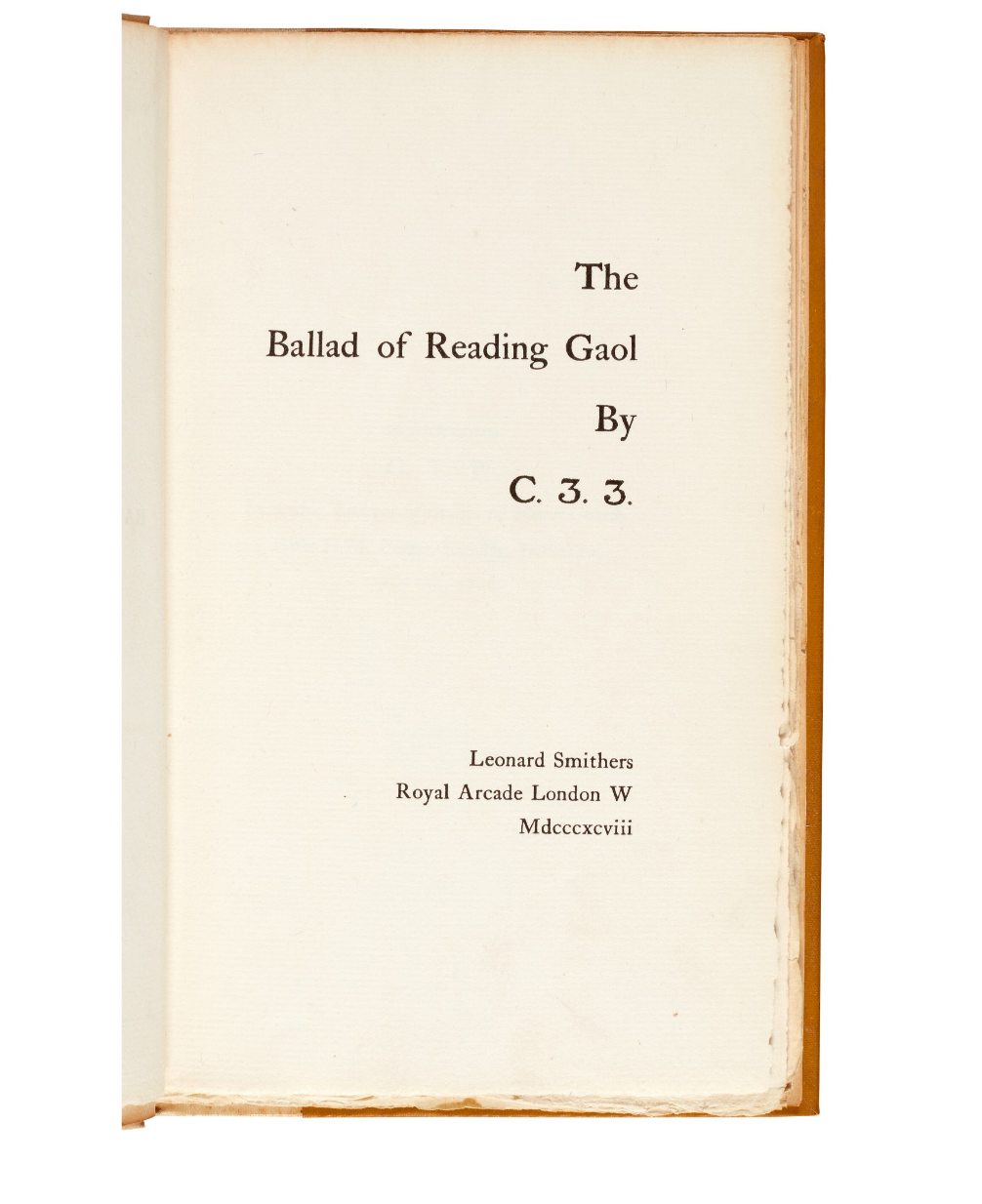
There is a particular kind of writing that can only come from someone who has lost everything. Not the romantic notion of loss — the artist suffering decoratively in a garret — but the real thing. The kind where your name has become a joke, your children have been taken from you, your body has been broken by hard labour, and the man you loved has already moved on. That is where Oscar Wilde wrote The Ballad of Reading Gaol. And that is why it still hits the way it does.
Published in 1898, two years after his release from prison and two years before his death in a shabby Paris hotel room, the Ballad is unlike anything else Wilde ever wrote. The sparkling wit is gone. The epigrams are gone. What remains is something rawer and more honest than he ever allowed himself to be in his years of triumph — a long, plain-spoken meditation on guilt, death, and what it means to be witnessed in your worst moment by other broken men.
If you only know Wilde as the cleverest man in any drawing room, this is the poem that will surprise you. It is the sound of the mask coming off.
♦ ♦ ♦
The Poem That Shouldn’t Work
On paper, the Ballad ought to be a mess. It is long — 109 stanzas across six sections. It shifts register without warning, moving from near-journalistic reportage to lyrical abstraction and back again. And its most famous line is so quotable it has very nearly been loved to death:
Yet each man kills the thing he loves.
You have seen it on mugs, on tattoos, in Instagram captions. Ripped from its setting, it reads as an elegant paradox — a sad little truth about love that sounds clever and goes down easy. But that is not what Wilde meant by it at all. In context, the line is doing something far more unsettling. He is not offering a universal truth to be admired. He is building a case, line by careful line, that cruelty, cowardice and desire are not the opposites of love but among its expressions.
The man at the centre of the poem — a soldier — has murdered his wife. Wilde stands in the prison yard, watches him walk toward the gallows, and finds in that man’s crime not a monster but a mirror. That is not a comfortable move. It is also not an accident.
♦ ♦ ♦
Structure as Argument
Why the shape of the poem is the point.
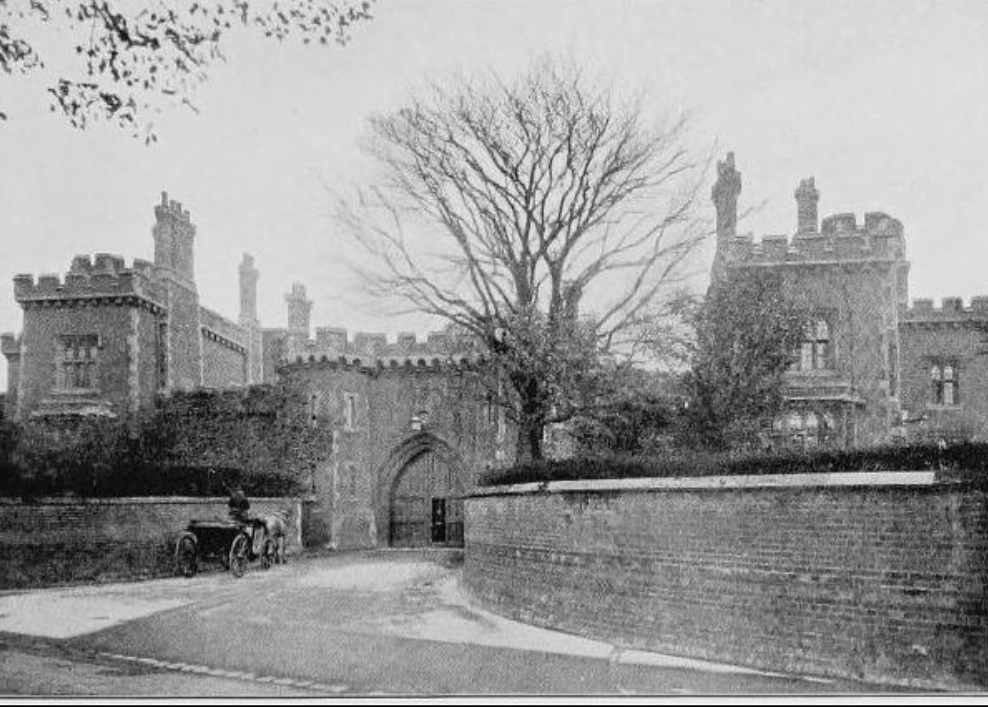
The Ballad is built in six numbered sections, and that architecture carries real weight. The first establishes the central image: Charles Thomas Wooldridge — a trooper of the Royal Horse Guards who cut his wife’s throat and was hanged at Reading in 1896 — pacing the yard under the open sky. Wilde watches him. And we, the readers, watch Wilde watching him.
That triangulation is the poem’s engine. We are never simply observing the condemned man; we are observing Wilde recognising something in him. The poem never once lets us forget that its speaker is himself a prisoner — also convicted, also marked, also counting down his own measure of days. The compassion in the poem is not the lofty pity of a free man for a doomed one. It comes from inside the same walls.
Sections two and three build dread through repetition. The word doom tolls like a bell. The scaffold appears and vanishes and reappears like an image in a recurring nightmare. And Wilde reaches deliberately for ballad metre — the old four-beat, three-beat swing of the folk tradition — precisely because the ballad is the form that ordinary people have always used to tell their most terrible stories. The form itself makes a statement: this is not art for drawing rooms. This is something older, and plainer, and truer than that.
Sections four and five turn inward, into the aftermath. The execution is done. What is left is the grief the prisoners cannot name, the sense of something irreversible having happened that the world beyond the wall will never even notice. Here Wilde mounts his most sustained attack on the prison system itself, on the casual cruelty dressed up as civilisation:
The vilest deeds like poison weeds
Bloom well in prison-air.
It is blunt in a way his earlier writing never dared to be. There is no glitter on it. He is not performing sorrow for an audience — he is reporting it, like a witness who has been sworn in.
Section six is the resolution, or as close to one as the poem will allow. It returns to the refrain about killing the thing we love, but by now everything that has come before — the hanging, the quicklime grave, the sleepless nights, the way grief moves through a prison like a contagion — gives those words their full and final weight. The poem does not end in consolation. It ends in witness. And Wilde signs it not with his own name, but with his cell number: C.3.3.
That signature is the most devastating literary decision in the whole poem.
♦ ♦ ♦
The Psychology of the Refrain
Read the full stanza and you find Wilde quietly itemising how men kill the thing they love: the coward does it with a kiss, the brave man with a sword, the flatterer with a word, the bitter man with a taunt. This is not a vague observation about human nature. It is something much closer to a taxonomy of self-destruction — and, beneath that, it is Wilde reckoning with his own ruin and his own part in it.
He never names Lord Alfred Douglas. He does not need to. Anyone who knew the story understood. Wilde’s downfall was inseparable from that relationship: the vanity of it, the obsession, the way he kept returning to it even as he watched what it was costing him. The Ballad is not really about Wooldridge at all. It is about the many ways a person can walk, eyes wide open, toward their own destruction — and how little pity the world holds in reserve for those who do.
Here is what I find most quietly remarkable about it, and I’ll admit my reading is shaped by thirty years spent sitting with people at the lowest points of their lives. Wilde does not cast himself as a victim. He casts himself as a participant. The poem refuses the clean, comforting story of an innocent man destroyed by a cruel society — not because that story is untrue, but because Wilde was honest enough to know it was incomplete. He had agency. He made choices. He killed the thing he loved, and he will not pretend otherwise.
Anyone who has watched a person begin to face their own part in their own undoing — without collapsing into self-pity, without reaching for someone else to blame — knows how rare and hard-won that clarity is. To arrive at it inside a prison cell, with your health gone and your name in ruins, is something close to extraordinary.
It is not an apology. It is not a recantation. It is testimony.
What the Ballad Does That His Plays Cannot
Wilde’s comedies are glorious, but they hold the world at a careful arm’s length. The whole mechanism of The Importance of Being Earnest, of An Ideal Husband, of A Woman of No Importance, is that art is a controlled environment — a place where ideas can be tried out safely, where nothing is finally at stake because everything has been made so beautifully, so deliberately, artificial.
The Ballad takes that apart. It was written by a man for whom nothing was safely artificial any longer. Every mask had been stripped away. And what lay underneath — what the poem lets us see — was not the hollow poseur his enemies had wanted him to be, but something far more human: a man capable of real feeling, real guilt, and real solidarity with other people in pain.
The prisoners he describes are not made beautiful. They are not there to illustrate a philosophy. They are men who cannot sleep, men who weep without knowing why, men shuffling round a yard in the grey light before dawn. And in writing them exactly that way — without ornament, without distance — Wilde does the one thing his dazzling earlier work never quite managed to do. He makes you care.
♦ ♦ ♦
A Poem About Shame — And Its Refusal
What strikes me most on returning to the Ballad is how it handles shame. Wilde had been publicly shamed about as thoroughly as Victorian England knew how to manage. His name had been scraped off the playbills of his own theatres. His books had been pulled from the shelves. He had served two years of hard labour and come out with his body broken and his reputation in pieces.
The expected move — the socially legible one — was either silence or abasement. Disappear, or beg forgiveness. People who have been shamed that completely usually do one or the other, because shame’s whole instinct is to make you small and quiet.
The Ballad does neither. It is not an apology and it is not a recantation. It is Wilde standing in the ruins of his own life and insisting that he still has something to say — and that what he has to say is worth your hearing. The poem takes the raw experience of being broken by a system and turns it outward, into an indictment of that system. It converts shame into testimony.
That is no small act. It is, in fact, the most Wildean thing about a poem that on its surface looks nothing like the Wilde we thought we knew.
♦ ♦ ♦
Why It Still Matters
The Ballad of Reading Gaol first appeared under the name C.3.3., because Wilde genuinely doubted the world would read it if his own name sat on the cover. His instinct was probably sound. His name still carried the stink of the trials.
And yet it landed at once. It sold out its first printing. It was reprinted, and reprinted again. People who had never read a line of Wilde read this. Something in its plainness — its refusal of the decorative, its insistence on the sheer weight of the body being hanged, of the quicklime and the clay — reached readers who might have waved away The Importance of Being Earnest as too clever by half.
What Wilde discovered in prison, and what the Ballad proves beyond doubt, is that he was capable of writing something that needed no mask at all. He had spent his whole career insisting that the surface was everything, that sincerity was the last refuge of people with nothing interesting to say. Somewhere in cell C.3.3. he found out he had been wrong — and he had the honesty, and the courage, to say so in print.
The wit never truly came back. He died in Paris eighteen months after the poem appeared, broke and very nearly forgotten, in a rented room he could not afford. But the poem outlived him. It survived because it is true in the particular way that only things written at the absolute limit of a person’s endurance can be true.
And that, in the end, is what literary analysis is really for — to ask not only what a poem means, but what it cost to write, and whether the cost was worth it.
In this case, it was.
Continue Reading on Modern Wilde
The Three Trials of Oscar Wilde: The Complete Story of His Downfall
De Profundis: Wilde’s Letter from the Abyss
Lord Alfred Douglas: The Golden Boy Who Became Oscar Wilde’s Ghost